Automakers are Lagging on Safety Features
The Obama administration received pledges from twenty automakers committing to voluntarily equip all of their passenger vehicles with automatic emergency braking by September 2022.
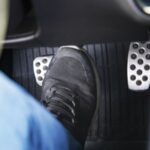
Only four of 20 automakers in 2017 equipped at least half of their U.S. models with standard automatic emergency brakes, which automatically apply the brakes when a front collision is imminent.
Safety advocates say the remaining automakers have little incentive to keep their promises regarding safety technologies because the Trump administration has shown no urgency about enforcing the deadline or pushing for other life-saving technologies.
Read the article at The Detroit News.
Bright-Blue Self-Driving Semi-Trucks Hit Atlanta Streets
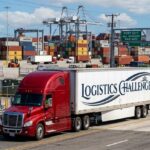
This week in Atlanta, Waymo's fleet of autonomous semi-trucks is pushing ahead to move both people and goods with self-driving technology in order to turn a profit.
Working with Google, Waymo will develop its systems and integrate them into shipping operations and a network of factories, distribution centers, ports and terminals.
“Trucking is a vital part of the American economy, and we believe self-driving technology has the potential to make this sector safer and even stronger,” Waymo’s public relations team wrote in the blog post. “With Waymo in the driver’s seat, we can re-imagine many different types of transportation — from ride-hailing to logistics.”
Read the article at The Detroit News.
Driverless Cars Could Affect the Value of Your Home
Autonomous vehicles could initiate some big changes in where we live and work, thus affecting the real estate market in addition to the transportation and tech industries.
The proximity of office and residential buildings to public transit hubs has traditionally been seen as adding value to the property by making commuting easy, a phenomenon that would seem to be bolstered by the low car-ownership rates of millennials.
“Clearly, any sort of big transit infrastructure program can act as a huge stimulus for the development of surrounding real estate,” said Scott Homa, a director of United States office research for real estate firm JLL. “It’s starting to emerge as a universal theme across the U.S.”
Read the article at Forbes.
Trump Voters May be Hurt Most of all from New Tariffs
Trump's recent move to impose hefty new tariffs on foreign steel and aluminum producers may quickly backfire and hurt precisely those who supported candidate Trump, especially workers in the U.S. auto industry.
Steel imports will now face 25 percent tariffs, while aluminum will be subject to new 10 percent duties - prices for cars could go up by hundreds of dollars, analysts warn.
"The exact impact of the new tariffs on the auto industry is unclear, in part because there are so many different sources of parts and components that go into the typical vehicle. Manufacturers and their suppliers are trying to figure the precise cost, said Joe Phillippi, head of AutoTrends Consulting, but he estimates it will be $200 to $300 a car. Some have put the figure significantly higher, and the number could vary widely by manufacturer."
Read the article at NBC News.
The World’s First Electric Pickup Truck
Workhorse debuted the world’s first electric pickup truck at this year’s Work Truck Show. It’s designed primarily for fleets.