Carbon Monoxide Kills. Is Your Car Off?
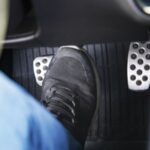
More than two dozen people have been killed, and dozens of others have been injured by carbon monoxide nationwide since 2006 after a keyless-ignition vehicle was inadvertently left running in a garage.
Instead of turning and removing a physical key to shut the newer, quieter vehicles off, drivers can mistakenly leave the motor running using the new keyless-ignition fob technology.
Seven years ago the Society of Automotive Engineers called for features like a series of beeps to alert drivers that cars were still running without the key fob in or near the car, and in some cases to shut the engine off automatically. The National Highway Traffic Safety Administration proposed a federal regulation based on that idea, a software change that it said could be accomplished for pennies per vehicle. In the face of auto industry opposition, the agency let the plan languish, though it says a rule is still under consideration.
Read the article at The New York Times.

Automakers Learn to be Careful What They Ask For
When auto executives asked Trump to prod California and the rest of the country toward looser fuel economy rules, they did not expect what they got - a veritable declaration of war against the state, threatening to destabilize the industry, tarnish its public image and leave the companies tangled in years of litigation.
The car companies suggested to the president that an assault on California's long-standing authority to set its own emissions rules is actually not something that helps them.
The car companies "opened up a Pandora's box when they asked for these fuel economy standards to be loosened around the edges," said Ann Carlson, an environmental law professor at UCLA. "What they did instead is unleash this anti-regulatory monster, and a process that has been driven entirely by antipathy toward regulations."
Read the article at Los Angeles Times.
Trump Meets With Auto Execs to Discuss Emissions Rollbacks
At a meeting on Friday with automaker executives, the Trump administration discussed their proposal to freeze auto-efficiency standards beginning in 2021, rather than continuing to strengthen them as originally outlined by the Obama administration.
The rollback has caused concern in the auto industry, and after the meeting, a statement was released by the auto industry suggesting the possibility of some form of negotiation with California.
“My hope is that they’re going to try gently to push back today, but it’s unclear that the White House is going to listen and they’re going to change the proposal,” said Margo Oge, a former EPA regulator who, at the agency’s office of transportation and air quality, helped create the standards that may now be rolled back.
Read the article at The Washington Post.
UPS to Introduce Electric Delivery Vehicles in London and Paris
UPS and UK technology company Arrival have partnered to develop a fleet of 35 modular electric delivery vehicles for trial in London and Paris, and are expected to be on the roads before the end of 2018.
The battery range is over 150 miles, and is currently higher than other EVs used in logistics service. The vehicles also have zero tailpipe emissions, an advanced vehicle display, and feature Advanced Driver Assistance Systems (ADAS) that aids driver safety and helps lower fatigue.
“UPS is working with Arrival here in the UK because their smart electric vehicles are helping to reduce dependency on fossil fuel. This is a pioneering collaboration that helps UPS develop new ways to reduce our emissions,” said Luke Wake, international director for automotive engineering at UPS.
Read the article at The Verge.
It’s a Bird! It’s a Plane! No, It’s an Uber Flying Car!
Dependent upon FAA approval, Uber proposes a service that will depart from drone ports set atop tall buildings, flying customers across cities, starting in Los Angeles and Dallas Fort-Worth by the end of 2023.
Using batteries, motors, and multiple small propellers for lift, Uber wants to build a network of new vehicles with vertical takeoff and landing that should be quieter, cheaper, and easier to fly than helicopters.
“The pace of technological advancement in this industry is faster than anything we’ve had to deal with,” said the acting administrator of the FAA, Dan Elwell. “When you put passengers on autonomous vehicles, as opposed to delivering a package, you introduce a much, much higher bar you need to get over.” To get past that, Uber is proposing having on-board pilots at first, before eventually making them autonomous (hopefully).
Read the article at Wired.