Ford Targeted by Environmental Groups Over MPG Rules
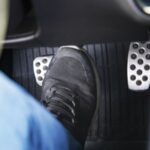
The Sierra Club, Greenpeace, Safe Climate Campaign and Public Citizen have taken out full page ads accusing Ford of working behind the scenes in Washington to convince the Trump administration to roll back the mileage rules, which would require automakers to produce fleets that average over 50 miles per gallon.
The CAFE rules were finalized by the Obama administration ahead of schedule in the months after Trump’s 2016 win, angering automakers who argued they were promised a mid-term review in 2018.
Andrew Linhardt, the deputy director of the Sierra Club's Clean Transportation for All campaign, said, "Ford claimed to be a green company, repeatedly telling us they wanted to put climate action in the fast lane with the clean car standards. But ever since Trump was elected, they've stomped on the brakes, seeking to put climate action in reverse by working to undo these very same standards."
Read the article at The Detroit News.
Start-up Company RideOS Tells Cars Where to Go
Started by two former Uber Technologies Inc. employees, RideOS has raised $9 million led by venture firm Sequoia Capital and has reached a partnership agreement with Autonomic, a division of Ford Motor Co.
Autonomic and RideOS plan to sell software that gives routes and other dispatching instructions to fleets of autonomous cars.
RideOS isn’t set on selling just to self-driving fleets, either. Blumenberg, its technical chief, noted how the electric scooters that have flooded San Francisco need routing services as well. These scooters advise riders not to take large hills, but have no way to enforce that for now, making them potential RideOS customers.
Read the article at Bloomberg.
Q&A: John Korte — An FMC Talks about the Mobility Revolution
While mobility as a service – known in the fleet world as “MaaS” – is gaining traction among fleets in Europe, it’s widely believed that in the U.S. many are talking about it but only a few are doing much about it. FMW recently caught up with John Korte, vice president of Donlen’s mobility business development team, to ask him what his company is doing about it, both in the U.S. and overseas. Here’s a transcript of our interview with him, edited for clarity and economy.
– Mark Boada, Executive Editor.
What kinds of products and services is Donlen offering to providers of mobility as a service that could also be used by traditional fleets?
At Donlen, over the last 12 to 18 months we’ve come up with several new products and services that are being utilized by ride-hailing and ride-sharing companies, three of which we could ultimately offer to our traditional corporate fleet clients.
Firestone Complete Auto Care Focused on TCO for Fleets
Firestone Complete Auto care is keenly focused on reducing TCO for fleets and FMCs as they continue to provide excellent service.
Mandatory RFID Chips Will Soon Be Tracking Cars in China
The Chinese government is readying a program that will make it possible to track citizens’ cars using RFID chips on July 1st. The program will be mandatory for new vehicle starting in 2019.
China already recognizes and tracks license plates with security checkpoint cameras in some regions. Facial recognition is common and the government has been rolling out a so-called “social credit” system, where citizens are rated by their finances, criminal behavior, and other factors.
“The Chinese government has gone all out to create a real surveillance state. [There’s] social credit, and facial recognition, and internet and telecom monitoring,” James Andrew Lewis, a senior vice president at the Center for Strategic and International Studies said.
Read the article at The Verge.