The Fleet Cyber Wars and BlackBerry’s Seven Steps for Security
By John Challen, Editor, International Fleet World
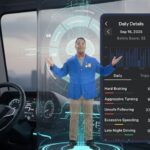
As automakers continue to innovate and incorporate new technologies into cars for the ultimate driving experience, new safety and cybersecurity challenges are emerging.
Connected and autonomous vehicles will be dictated by software, so it is critical that this software is safe and secure over the lifetime of the car. Consumer safety, costly recalls and brand reputation are at stake when a vehicle is compromised. For fleets, security is essential to ensuring that uptime and efficiency levels are as high as possible, and drivers must be confident that they are safe – in every sense – behind the wheel.
In response to this, BlackBerry has set out a seven-pillar recommendation for OEMs and the fleet industry to follow to try to ensure that cars can be made as safe and secure as possible.

One Foot in Today, One Foot in Tomorrow
ARI Fleet is simultaneously focusing on helping clients succeed today, and helping them to prepare for tomorrow.
Official and Actual Hybrid MPG Figures Published
The research by consumer motoring website HonestJohn.co.uk analysed 148,000 real MPG fuel reports submitted by UK drivers and discovered that hybrids and plug-in hybrids (PHEVs) have the highest gaps between official and real-world figures.
The data suggests the Mercedes-Benz C-Class C350e is the UK’s worst performer, achieving just 36.9% of its official fuel economy, while the BMW 3 Series 330e and Volkswagen Golf GTE are the second and third worst with a respective 37.2% and 38.1%. The Mitsubishi Outlander PHEV (42.5%) and BMW 2 Series Active Tourer 225xe (56.4%) complete the bottom five.
In contrast, the Lexus GS 450h tops the ranking when it comes to achieving the highest percentage of its manufacturer fuel economy figure, returning an average of 84.2%. In second place is the Toyota RAV4 Hybrid 2WD (79.3%) followed closely by the Toyota Yaris 1.5 VVT-I Hybrid with 77.9%. The final entries in the top five are the hybrid versions of the Kia Niro (77.4%) and Toyota C-HR (77.2%).
Read the article at Fleet World.
VW Penalty One of the Largest Ever Imposed in Postwar Germany
On Wednesday, German prosecutors said they had imposed a fine of 1 billion euros, or $1.2 billion, on Volkswagen for failing to properly supervise the employees who devised and deployed illegal software in diesel models to evade pollution controls.
Although the vast majority of the vehicles at issue are in Europe, the financial penalties were much stiffer in the United States because of the country’s stricter enforcement regimen and a legal system that is more favorable to consumers.
“We are working intensively to deal with our past,” Herbert Diess, Volkswagen’s chief executive said in a statement on Wednesday. “Further steps are necessary to restore trust in our company and the auto industry piece by piece.”
Read the article at The New York Times.
Donlen Named One of Chicago’s Best and Brightest Companies to Work For – Fourth Consecutive Year
Donlen has been recognized by the National Association for Business Resources (NABR) as one of Chicago's Best and Brightest Companies to Work For® for the fourth year in a row.
"It is no surprise that the survey results show that Donlen employees value the many education and development opportunities available to them,” said Donlen president, Tom Callahan. “Donlen is dedicated to providing all our employees the opportunity to grow and develop in a positive and productive work environment. We recognize that when our employees are fully engaged and satisfied, the service they provide to our customers is unmatched.”