Electric Car Price Tag Shrinks Along With Battery Cost
The crossover point — when electric vehicles become cheaper than their combustion-engine equivalents — will be a crucial moment for the EV market.
The decision to buy an EV will be made as a matter of taste, style or preference — but not, for much longer, a matter of cost.
For a midsize U.S. car in 2015, the battery made up more than 57 percent of the total cost. This year, it’s 33 percent. By 2025, the battery will be only 20 percent of total vehicle cost.
Read the article at Bloomberg.

VW Backed Chinese EV Claims 620K-Mile Battery Life
Chinese carmaker JAC Motors and Volkswagen have co-developed an SUV-inspired electric vehicle iEVS4, and is claiming an industry milestone of a battery pack life of up to 620,000 miles.
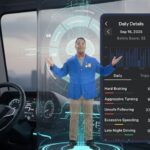
The vehicle also boasts a comprehensive suite of human-to-vehicle interaction technology.
On top of the claimed battery life, the iEVS4 claims a normal driving range of 292 miles with a maximum cruising range of up to 372 miles. The tie-up with VW has enabled the carmaker to perfect a liquid cooling system that it says makes the battery pack less prone to overheating and extending its lifespan.
Read the article at TU Automotive.
5 Reasons Experts Think Autonomous Cars Are Many Years Away
When experts were asked when we might actually see self-driving cars everywhere - their optimistic assessment is 10 years.
Many others say decades as researchers try to conquer a number of obstacles.
Snow and weather, pavement lines and curves are among the problems that researchers must overcome to start giving rides without humans behind the wheel.
Read the article at AP News.
Building, Innovating and Scaling Shared Mobility Worldwide
This innovative company offers software solutions to build and scale shared mobility - with three main focuses: ridesharing, carpooling and vehicle sharing.
Growth and Change at Auto Driveaway
With two recent sizable strategic acquisitions, it’s a time of growth and change at Auto Driveaway.