Hyundai’s New Phone App Can Change Any EV’s Settings
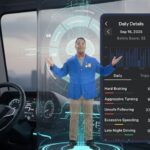
Hyundai Motor Group has created what it calls "smartphone electric-vehicle pairing-based performance-adjustment technology."
The smartphone app can customize and control the features and performance of personal vehicles, rentals, or vehicles in car-sharing services; users just have to download their profiles from the cloud.
Through the app, you can adjust seven performance fields: maximum torque output; top speed; the ignition, acceleration, and deceleration "abilities"' responsiveness; regenerative braking; and the climate-control system's energy usage.
Read the article at Car and Driver.

Motus Report Reveals Almost 40% of Monthly Car Allowances Lost to Taxes
Total Tax Waste for Employers and Employees Adds Up to $1.2 Billion Per Year
Motus released its Vehicle Program Tax Waste Report, which reveals how car allowance tax waste impacts U.S. companies and their mobile employees, including those who work in professional sales and management, as well as top executives.
The report found that 39 percent of one year’s car allowance spend is lost to tax waste, with the total tax waste for employees and employers reaching $1.2 billion each year.
Click here to read the report
NAFA’s Legislative Counsel: A Nationwide Vehicle Miles Travel User Fee Pilot Program Is Coming This Year
Widespread support seen in Congress to explore replacing gas and diesel excise taxes; fleets encouraged to participate
By Mark Boada, Executive Editor
NAFA’s Washington, D.C. lobbyist predicts that a nationwide pilot program to replace the long-standing excise taxes on gasoline and diesel fuel with a vehicle miles traveled user fee, or VMT, will be authorized by the U.S. Congress this year.
“Reauthorizing the Federal Highway Aid Program is now at the top of the agenda,” Pat O’Connor, president of Kent & O’Connor, Inc., said in an interview with Fleet Management Weekly last week. “There’s a gap in funding for the Highway Trust Fund, and the major buzz is about a vehicle miles travel fee as the long-term solution.”
‘Digital Designated Drivers’ Shown to Reduce DUIs
A Boston Consulting Group found that advanced driver assistance systems (ADAS) features and sensor technologies could save 9,900 lives every year in the United States, if deployed today.
The ADAS and crash-avoidance technologies present a tremendous opportunity to further reduce drunk driving rates and prevent collisions that are caused by human error since AVs, unlike human drivers, are incapable of driving while under the influence or distracted – and, furthermore, can be programmed to adhere more strictly to speed limits and traffic laws.
Read the article at Forbes.
New Study: Rear-Seat Passenger Restraint Systems Need Improvement
A new IIHS study of frontal crashes in which belted rear-seat passengers were killed or seriously injured, suggests that more sophisticated restraint systems are needed in the back.
In the rear seat, side airbags protect passengers in a side crash, but there are no front airbags, and the seat belts generally lack crash tensioners and force limiters. During a frontal collision, forces can cause a back-seat passenger to collide with the vehicle interior. Seat belts can prevent that, but, as the new study shows, seat belts without force limiters can inflict chest injuries.
Read the article at IIHS.