The 20 Late-Model Cars Most Likely to Be Stolen
A list of the 2016–2018 model year cars that are most likely to be stolen has been compiled by the Insurance Institute for Highway Safety.
The agency created a method that calculates the relative likelihood that a car might be stolen, compared to the average frequency of thefts among all vehicles during the same time period.
Just because a car or truck doesn't make this list doesn't mean it's theft-proof or never stolen—it just isn't stolen frequently enough to crack the top 20.
Read the article at Car and Driver.

How to Be as Smart as Your Smart Car While You Drive
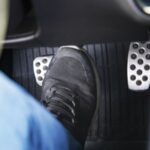
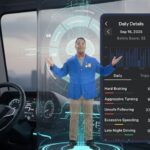
According to a new study by State Farm, Americans who drive vehicles equipped with Adaptive Cruise Control (ACC) or Lane Keeping Assist (LKA), admit to using their smart phones while driving at significantly higher rates than those without the latest tech.
Take your eyes off the road for less than five seconds to focus on another task - while driving at 65 mph - the length of a football field in 3.2 seconds. Anything can happen in 100 yards.
“Innovations such as Adaptive Cruise Control and Lane Keeping Assist are designed to make our roadways safer,” said Laurel Straub, State Farm Assistant Vice President, Enterprise Research. “These systems are meant to assist drivers, not replace them.”
Read the article at State Farm.
Colorado Defies Trump’s Attempt to Weaken Emission Regulations
As the Trump administration prepares to formally move on its plans to cut the federal mileage and emissions standards, the move could become moot.
Colorado is the latest state to strike a deal with automakers, following California’s move last week.
Agreements have now been set up with eight different automakers, ensuring the desired higher standards are met.
“This agreement will ensure that Coloradans have access to the range of clean car choices that are increasingly available to consumers in other states,” said Colorado Transportation Department Executive Director Shoshana Lew.
Read the article at The Detroit Bureau.
NYPD Hybrid Patrol Cars on the Road This Fall
Department plans to go all-hybrid by 2024
The New York City Police Department will begin patrolling the city’s streets with hybrid cruisers this fall, and plans to convert all of its 10,000 vehicles to hybrid models over the next five years.
The move is expected to save the NYPD millions of dollars a year in fuel costs and significantly reduce tailpipe emissions.
The first of the department’s new vehicles will be the Ford Fusion-based Police Responder Sedan, the first true hybrid built for police purposes. Although it sounds and drives like a typical police vehicle, Ford estimates the cars will save more than 1,500 gallons of fuel per car per year. The department currently spends about $15 million a year on gasoline.
The bulk of [the] fuel savings come during the five hours Ford estimates a police car spends idling nearly during a typical eight-hour shift. The electric motor on the hybrid allows the gas engine to turn off, saving more than 900 gallons a year per cruiser.
Autonomous Car Predictions Are Overly Optimistic
An autonomous vehicle continuously scans, detects, processes and, microsecond by microsecond, responds to what it sees or senses under, around and above the vehicle. Even weather is factored in.
Communication between autonomous vehicles is key to safe and effective autonomous operation.
Phasing out non-autonomous vehicles, necessary for sufficient vehicular intercommunication, must be staged over time region by region. Dominant autonomous car production and use throughout the country are years away.
Read the article at The Washington Post.