Truckers Step Up As Coronavirus Pumps Demand For Necessities, But Face Mounting Obstacles
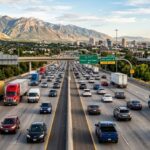
With people across much of the country ordered to stay home to slow the spread of the virus, truckers are still plying the highways in an effort to ensure those loads of food, soap, toilet paper and cleaning supplies can keep moving.
As the virus has taken hold, truckers say they have had to contend with new challenges on the road: State governments that have ordered rest areas closed, meaning truckers no longer have places to eat or use the bathrooms.
Truck drivers spend much of their time alone and can sleep in their cabs. They’ve been taking small measures to protect themselves: Using their own pens to sign forms, carrying hand sanitizer and trading cans of Lysol spray among themselves.
Read the article at The Washington Post.

NAFA Webinar: Annual Business Meeting with NAFA President Patti Earley, CAFM
Attend the Annual Business Meeting with NAFA President Patti Earley, CAFM, this Wednesday, April 1, 12:00-1:00pm Eastern.
During this webinar, President Earley will discuss NAFA’s efforts from 2019, initiatives for the coming year, and will discuss how NAFA is moving forward in light of the current challenges facing the industry and the world. Learn how your association intends to emerge better and stronger, building on the value foundation established during the past 12 months.
The Ride Hailing Industry Is Getting Turned On Its Head By Coronavirus
The coronavirus pandemic has caused an abrupt shift in consumer behavior and is upending the on-demand industry, where the biggest companies were built first and foremost around ride-hailing services rather than food deliveries.
Moving to food delivery may help some companies weather the crisis, but it could come at a cost. Uber's meal delivery business has been a "money-losing" venture that has weighed on the stock. The margins on delivery are lower than ride-hailing/
For some companies, the trend has led to rapid expansion. Instacart, the grocery delivery startup, said this week that it plans to bring on 300,000 additional workers in North America over the next three months to help meet its surging demand.
Read the article at CNN.
Continuous License Monitoring: Myth vs. Fact — Part Three
By Trent Dressen, Director of Sales, SuperVision
Employers typically pull a driver’s motor vehicle record (MVR) prior to hiring and once a year after that.
Although completing the initial and annual pulls meets the minimum obligation, there is added value in continuous monitoring for employers.
Myth: Continuous MVR Monitoring is Unnecessary —Pre-Employment & Annual MVR pulls are “good enough”
Fact: Annual MVR pulls give risky drivers grace periods of up to a year
Drivers can receive a driving violation or license status change any day of the year; a company should be paying attention to their drivers’ records every day as well. Pulling an MVR just once a year means a violation can go unnoticed for a long period of time. For instance, if a driver gets a DWI the day after the MVR is pulled, he or she has a “grace period” of 364 days before a serious and potentially costly source of liability is discovered by the employer.
White House Set to Reveal Final Fuel Economy Rollback
Sometime in the coming week, the White House is expected to announce a modest 1.5% annual increase in fuel efficiency, rather than a summary freeze in vehicle mileage, but one that still falls well short of the current mandate.
The Trump administration's “Safer Affordable Fuel-Efficient Vehicles Rule” attemps to justify a CAFE rollback in several ways, most notably by claiming that the push for better mileage would result in vehicles that are lighter and less likely to stand up to a crash.
The administration’s proposal would actually add $300 billion in higher fuel costs this decade. That figure is also a matter of debate and would depend on fuel prices. Gas is quickly falling towards a national average of under $2 a gallon and is already well below that in some areas. Fuel prices will likely recover once we get past the coronavius crisis.
Read the article at The Detroit Bureau.