More Highlights from Cambridge Mobile Telematics’ Fleet Road Safety Panel Discussion
By Ed Pierce, Contributing Editor
This is the second part of the Cambridge Mobile Telematics' panel discussion about distracted driving, “The Road to Safety for Your Fleet Drivers: Why Behavior Change is Key to Eliminating Distracted Driving.”
The panel included Judy Columbus, senior fleet analyst for GlaxoSmithKline; Brian Kinniry, Product Development Director for CEI; Emily Stein, president of the Safe Roads Alliance; Joel Feldman, president of EndDD.org. CMT director of marketing Ian Murphy served as host.
Among the topics covered by the panel were monitoring driver performance and fleet driver safety education. How much is too much? How much is not enough? How much is just right?

What to Do if You’re Driving and Hear a Tornado Warning
If you’re on the road in your vehicle and there is a tornado warning, solution number one is to avoid driving into a storm altogether. But if there is no option, pull over and evaluate the situation.
“If the tornado is far away from you, drive your car to the nearest sound structure–a gas station, convenience store, home, et cetera–that is out of the system’s path and seek shelter there until the warning has expired,” said meteorologist Shane Hinton.
It’s tempting to pull under an overpass or bridge for shelter, but those structures act as a wind tunnel, potentially funneling the tornado right into you and exposing you and your vehicle to even more peril. You may need to head for a ditch.
Read the article at The Drive.
We Need to Build More EV Chargers, but Where?
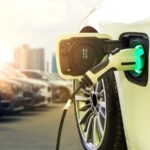
An EV charging network is popping up across the country, driven by efforts from private companies and various government initiatives. Where will future chargers be built?
The study's resulting charging maps imagine a network of chargers splayed at roughly even intervals, with clusters around the state's population centers, where dozens or even hundreds of chargers will be necessary to support the higher number of EV owners and the lower likelihood that those owners will be able to charge their EVs at home.
"The infrastructure needs to be there, and users need to be educated about these vehicles" before they'll feel comfortable purchasing one," Mehrnaz Ghamami, an assistant professor in civil and environmental engineering at Michigan State University says.
Read the article at Car and Driver.
NHTSA Launches Influencer Campaign to Educate Drivers on Safety Features
The U.S. Department of Transportation launched a new series of safety videos featuring Jason Fenske from Engineering Explained, demonstrating for the public the potential lifesaving benefits of several advanced driver assistance systems available in many new vehicles.
“Understanding what advanced driver assistance technologies can and cannot do for the driver is critical to everyone’s safety,” said Dr. Steven Cliff, the National Highway Traffic Safety Administration’s Acting Administrator.
This new campaign builds on NHTSA’s successful 5-Star Safety Ratings program by continuing to educate consumers about safety features and new safety technologies. NHTSA is pursuing a comprehensive safe system approach, which recognizes that everyone – including those who design, build, operate, and use the road system – shares in the responsibility for road safety.
Read the article at NHTSA.
MADD: Make Drunk Driving Prevention Standard Equipment on All Cars
Mothers Against Drunk Driving (MADD) today renewed its challenge to the auto industry to embrace passive drunk driving prevention technology and support federal legislation to mandate the lifesaving systems in all new vehicles.
In a statement for a House Energy and Commerce Subcommittee on Consumer Protection and Commerce hearing on automotive technologies, MADD noted that in March 2019 before the same subcommittee, then-MADD National President Helen Witty called on auto manufacturers and suppliers to make drunk driving prevention technology “commercially available ... as soon as possible.”
Two years later, MADD’s research has identified 241 examples of existing technologies that could help prevent drunk driving. Getting this technology on all new cars is long overdue, said MADD National President Alex Otte.
Read more of the press release.