Tesla Finally Updated its Full Self-Driving Software – but Warned the Tech Might ‘Do the Wrong Thing at the Worst Time.’ Elon Musk Told Drivers to be ‘Paranoid.’
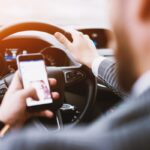
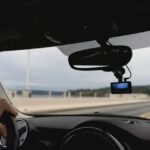
Tesla updated its Full Self-Driving (FSD) software for some of its drivers - and warned them that the system "may do the wrong thing at the worst time."
"Full Self-Driving is in early limited access Beta and must be used with additional caution. It may do the wrong thing at the worst time, so you must always keep your hands on the wheel and pay extra attention to the road. Do not become complacent," the beta v9 release notes said, according to one driver's screenshot.
Tesla CEO Elon Musk originally said that the beta v9 update would launch in 2018, before delaying its release. In an April tweet, Musk said that drivers would not have to wait past June, but pushed the timeline back again in a July 3 tweet where he admitted that he didn't expect making self-driving cars to "be so hard."
Read the article at MSN.

How Business Professionals Can Overcome Obstacles that Prevent Them from Realizing Their Goals (and Dreams) — Part I
Everything rises and falls on leadership
By Mark LeGrand, Certified Business Trainer, Speaker and Coach/Director
One of my goals as a business coach is to help professionals identify the challenges or obstacles that prevent them from successfully realizing their professional and personal goals and dreams.
Are you living your dream or the dream someone else has for you? Have you heard “you should be a ___” or thought, “I always wanted to be a ___ but my parents wanted me to be a __, and I didn’t want to disappoint them?”
When the dream is right for the person and the person is right for the dream, the two cannot be separated from each other. For something to truly be your dream, you need to see the possibility it represents – and you need to own it!
AFLA Webinar: Accelerating Your EV Journey
Tuesday, July 20, 2021 at 1 p.m. ET / 10 a.m. PT
Wondering how to prepare for your company’s EV journey and manage the transition to electric?
Join AFLA for an engaging and interactive webinar that will equip you with critical industry insights to accelerate your fleet’s journey to electric vehicles.
At the early stages of this exciting journey for fleets, this webinar is sure to ignite new thinking and offer current experiences to consider as you plan for electrification within your fleets in the years ahead.
Stellantis Goes From Zero to Many BEVs With Ambitious Electrification Plans
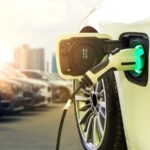
Stellantis is the new company formed by merging Fiat Chrysler Automobiles and PSA Group, consisting of 14 brands The company is accelerating its plans and upping its spending on its electric vehicles, platforms, technology, batteries, and plants so that it can be a major player in the space around roughly the same timeline as competing automakers.
The automaker expects to have 55 electrified vehicles for sale in the United States and Europe by 2025. By 2030, battery-electric and plug-in hybrid vehicles will account for more than 40 percent of sales in North America and 70 percent in Europe.
Engineers have developed four dedicated EV platforms: STLA Small, STLA Medium, STLA Large and STLA Frame to ensure the full gamut of vehicle types, sizes, and shapes, are offered as EVs, from subcompact Fiats to body-on-frame Ram trucks and commercial vans—a lucrative segment where Stellantis aims to beat Ford as the global leader.
Read the article at Motor Trend.
This Driverless Car-Sharing Service Uses Remote Human ‘Pilots,’ Not AI
Credit/Halo/T-MOBILE
T-Mobile is announcing a collaboration with Halo, a 5G-powered driverless car service that doesn’t actually use autonomous vehicles or require 5G mobile broadband. The new service is coming to Las Vegas later this year with a fleet of remotely operated electric vehicles.
You use Halo’s app to summon a Kia Niroelectric vehicle. It arrives empty but under the control of a remote driver. You drive it to your destination. Then a remote driver takes over again and the car is no longer your problem. In Halo’s system, nine cameras feed video to a remote driver—whom Halo calls a pilot—with radar and ultrasonic sensors as a backup. The cars omit the expensive lidar sensors in most autonomous vehicles.
“You simply just hop off and go away, and the car disappears. You have better vision as a remote pilot than actually sitting inside the car,” says Halo founder and CEO Anand Nandakumar says. “It’s significantly cheaper than any other autonomous vehicle company.”
Read the article at Fast Company.