Starbucks, Ikea Partnering with EV Charging Entities to Set up Charging Stations
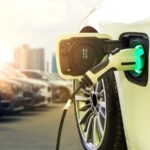
September 8, 2022 - Starbucks and Ikea will have EV charging stations in front of their outlets. Customers will be able to grab a coffee and charge their electric vehicle.
Ikea is partnering with Electrify America and Electrify Commercial to install 200 chargers across 25 different locations. The first locations are expected to open by late 2022 and to be completed by the end of 2023, the outlet announced on Aug. 11.
Starbucks, meanwhile, is teaming up with Volvo to build 60 chargers at 15 stores from Denver to Seattle before the end of the year, with each location along the 1,350-mile route no farther than 100 miles apart. The inclusion of the charges is intended to make electric vehicle charging “as easy as getting a great cup of coffee,” Starbucks’s chief sustainability officer Michael Kobori said in March.

Get The Most Out of Your Data | AFLA Learning Series
In today’s world, data is king. Knowing every aspect of your fleet’s operation is the best way to measure asset performance and maximize return on investment (ROI).
Join us for this AFLA Learning session on Tuesday, September 27, 2022 at 2:00 PM CT, to explore how fleets can gain visibility into what’s going on under the hood of their vehicles through integrating a predictive analytics system with a fleet management software.
In this session, fleet managers will learn how to: Streamline your maintenance management process, Automate maintenance schedules and reminders, Take advantage of artificial intelligence (AI) benefits to reduce downtime for your vehicle
Moderator: Rachel Sumstine, Acertus
Speakers: Klay Kachur, Optimum Fleet Health and Matt Chapman, Fleetio
How Electric Cars and Trucks Improve Grid Reliability
With the Western U.S. facing a record September heat wave that is stressing its electric grid, some have asked if the region – and the entire nation – can handle an increasing number of electric cars and trucks.
Some of this, of course, is just bloviation from ideologues who want to keep American addicted to oil.
Putting the misleading hyperbole aside, it’s a reasonable question to ask if our electric grid can handle all the electric vehicles (EVs) we need to address the climate crisis (which is what’s actually responsible for the heat emergency that’s straining the electric grid today).
The short answer is: Yes, EVs can easily be charged when there’s spare capacity on the grid.
The longer answer is: EVs can improve the resilience and reliability of the grid, especially if we put in place common sense policies and technologies.
Slowing Down to Speed Up
By Jim Wohlever, Senior Vice President, Customer Experience, Wheels Donlen
As we enjoyed the recent Labor Day weekend, it was more quiet than usual since many people started their holidays earlier.
While we have just celebrated the 128th Labor Day, our intentions should be to reflect and assess how we are working and how we can make ourselves available for our clients, colleagues, friends, families, and ourselves.
So, I took some time to think about how I spend my time on a daily and weekly basis.
We Talk with Susan Gillies About NETS’ STRENGTH IN NUMBERS® Fleet Safety Benchmark Conference
October 5-6 at the Ann Arbor Marriott Ypsilanti at Eagle Crest or with Online Participation
By Ed Pierce, Contributing editor, Fleet Management Weekly
“NETS annual conference is the perfect time to learn from experts and road safety advocates about the state of road safety today and tomorrow,” says NETS Executive Director Susan Gillies-Hipp.
"The conference is unique in that participants from a variety of industry sectors can share best practices, talk to others who have similar interests, and get the latest information about technology and success stories that can be applied to their own fleets.
"In addition, the conference is when NETS shares the results of our annual Benchmark report, providing exclusive insight into the comparison of leading road safety programs and the identification of best practices to put into place a cost-effective, integrated, and comprehensive plan to improve road safety performance.”