Global Smart Fleet Management Market is Anticipated to Reach US $962.6 Billion by 2031
There is a growing opportunity for smart fleet management providers to expand their services to new regions and markets, with the increasing globalization of businesses.
The key element driving the market for smart fleet management is the vehicle telematics. The integration of telematics systems provides valuable data on vehicle location, maintenance needs, and driver behavior.
Artificial intelligence (AI) and machine learning are being leveraged to analyze vast amounts of data generated by smart fleet systems, which enables predictive maintenance, route optimization, and data-driven decision-making.

Announcing NETS 2023 Sector Meetings!
NETS Industry Sector Meetings - October 10 & 11, 2023. Join us in-person at NETS Annual Strength IN Numbers Fleet Safety Benchmark Conference in Indianapolis.
Join Fleet Safety professionals from Utility, Agriculture, Insurance and Heavy Goods Vehicle sectors for open round-table discussions and presentations addressing sector specific road safety challenges and opportunities.
To register for the conference, click here.
The Car Market Balloon Is Deflating
For the first time in several years, car prices are actually cooling, and dealers and manufacturers are once again offering cash incentives for new vehicle purchases.
With inventory mounting on dealer lots, OEMs and dealers alike are dropping prices with massive swings, hoping to lure more clients in the door. With EV inventory racking up even faster and showing as much as 103 days of sales covered, it makes sense that EV prices are dropping faster than average. Tesla is the biggest discounter, seeing average sales drop from $62,272 to $55,106—and that number is from July, before Tesla dropped Model S and Model X prices significantly earlier this month.
Isuzu Partners with ChargePoint on EV Charging Network for its Commercial Trucks
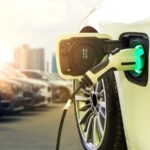
Isuzu recently selected ChargePoint as its official partner for EV charging infrastructure, software solutions, and training for Isuzu dealers and customers. In March, Isuzu announced its plans to launch the 2025 NRR EV, a Class 5 battery electric truck, in early 2024.
The NRR EV marks Isuzu’s debut in the world of all-electric production models. The truck supports both AC (Level 2) and DC Fast Charging (Level 3), providing versatile charging options.
“Commercial trucks play a critical role in the transition to electrification, underscoring the need for integrated charging solutions to help streamline operations and deliver a lower total cost of ownership (TCO),” said Rich Mohr, Senior Vice President, Americas at ChargePoint.
California Governor Vetoes Bill Requiring Humans in Autonomous Big Rigs
Governor Gavin Newsom has vetoed Assembly Bill 316, which would have required human attendants in driverless vehicles over 10,000 pounds. The bill saw broad support among state legislators and was backed by the Teamsters and other labor organizations.
The governor wrote in his veto message that the bill “is unnecessary for the regulation and oversight of heavy-duty autonomous vehicle technology,” adding that the existing regulatory framework is “sufficient.”
Teamsters president Sean O’Brien wrote that “jobs and communities” would have been saved by the bill, and vetoing it gives “a greenlight to put these dangerous rigs on the road.”