Hertz and EVgo Partner to Offer EV Renters One Year of Special Charging Rates
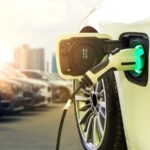
DC fast charging network EVgo has announced a new deal with rental car company Hertz that offers drivers renting an electric car from any Hertz location in the US with discounts on charging for a year, with no subscription or session fees.
“When people experience an EV for the first time, whether through a rental or riding along as a passenger, they see the benefits firsthand of quieter operation, smoother handling, quick acceleration, and of course, no tailpipe emissions,” says Maggie Tallman, EVgo senior vice president of business development and solutions. “By partnering with Hertz to expose new drivers to the electric experience, we can inspire more prospective EV drivers to make the switch and welcome them to the electric revolution.”

The UAW Strike Is Over: What Does This Mean for Fleets?
By Tanner Lee, Kingbee
Much has been written about the last six weeks of the historic strike against Ford, GM, and Stellantis. But in the final days of October, the United Auto Workers and the Big 3 reached an agreement.
Included in the agreement are a 25% increase in pay over four years, as well a restoration of cost-of-living increases that were suspended in 2009, totaling to increases over 30%.
Ford forecasts an increase in labor costs by roughly $850 to $900 per vehicle produced. It’s unclear whether or not those price increases will apply to large orders of commercial fleet vehicles, but fleets should brace themselves anyway.
Kingbee helps fleets adapt their inventory based on real-time demand signals, instead of relying on long-term forecasts.
Shell’s Jim Perkins Sheds Light on Diverse Sustainable Fleet Solutions
By FMW Staff
FMW recently had the privilege of sitting down with seasoned expert Jim Perkins, the Head of Fleet Solutions for Shell Oil Products, US.
While electrification is one of the most popular sustainability initiatives among fleets, there are many other ways that fleets can achieve immediate sustainability gains.
One way is with fuel card data. The data can help a customer identify unnecessary purchases and reduce fuel consumption. Sometimes a customer will even identify inefficient purchasing of fuel. This, too, can reduce consumption.
"Electric vehicles are the future, but fleet owners are looking for how to be more sustainable today. Again, it goes back to having a partner, somebody that can guide you through a plan or at least point you in the direction of the best opportunities," said Perkins.
Wanted: Trained Electricians to Install and Fix EV Chargers
In addition to the huge problem of non-working EV chargers, the push to electrification has another major issue: the lack of qualified journeymen electricians for residential and commercial installations.
According to Eric Feinberg, chief workforce officer at Qmerit, which connects installation companies and automakers with skilled electrical professionals, there were 1.2 million electricians identified by the 2000 US Census and just 610,000 in 2020.
“Another issue is that we have states coming in and saying that charger installations have to be inspected and certified, which requires the right type of electrician. That’s a reason we’ve jump-started a program to vet entry-level electricians for contractors, who then pay for their apprenticeship training.”
Right now, any journeyman electrician will have no trouble getting hired.
Even the Vatican is Going All-Electric After VW Scores Deal to Replace Entire Fleet With EVs
The Vatican City State, home to the Pope, will replace its entire fleet of vehicles with EVs by 2030. Volkswagen will deliver fully electric cars, including the ID.3 and ID.4, to the Vatican State to support its transition to EVs.
The transition is part of the Vatican’s “Ecological Conversion 2030,” a long-term project to cut emissions from the State’s fleet. VW announced Wednesday it will be the chosen partner to advance the plan.
The automaker will deliver just under 40 fully electric vehicles, including the ID.3, ID.4 electric SUV, and ID.5. Further electric models will be delivered at later stages until the entire fleet has transitioned to fully electric.