Japan Plans a 310-Mile Long Conveyor Belt to Replace Semi-Trucks
As we know, there’s been a commercial truck driver shortage for the last few years. But this is not just a U.S. problem; it’s an everywhere problem. In Japan, the proposed fix is a 310-mile-long conveyor belt.
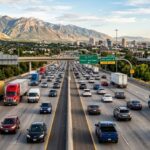
Referred to as the “Autoflow-Road,” this network of automated logistics roads would transport goods using both above-ground tracks and tunnels. At ground level, tracks could be placed in a variety of places, most likely medians and alongside shoulders. So, the basic infrastructure is already in place, and the use of tunnels would minimize the impact on above-ground congestion.
The ministry says the system “will not only address the logistics crisis but also help to reduce greenhouse gas emissions."

EVs Fare Poorly in J.D. Power Quality Survey; Ram and Porsche Top the Rankings
One of the most popular talking points from EV evangelists is that they require less maintenance and are cheaper to operate than gas vehicles. The 2024 Initial Quality Study from J.D. Power suggests that might not be the case, however, as EV owners report many more problems than their gas-owning counterparts.
The organization rates vehicles based on the number of problems there are per 100 units (PP100). This year, the 38th year of the study, gas and diesel vehicles averaged 180 PP100, compared to 266 PP100 for EVs and PHEVs. J.D. Power noted that even Tesla, the EV juggernaut, failed to perform well in this year’s study, as its customers report issues with funky turn signals and wiper controls.
Ram was the top brand overall for initial quality, and Porsche was the top luxury brand.
Safe Driving and Sustainability Go Hand in Hand
Did you know that driving more slowly, smoothly and safely also means burning less fuel? Safe driving and sustainability go hand in hand.
Acquisition of Fleet Logistics Group Completed
Following clearance by all relevant regulatory authorities, TraXall International announces the completion of the acquisition of Fleet Logistics Group from its shareholders Volkswagen Financial Services and TÜV SÜD.
The combination of the two organizations creates Europe’s largest independent mobility & fleet management provider with some 400,000 contracts under management.
Ross Jackson, CEO of TraXall International, said: “We are delighted that the significant acquisition of the Fleet Logistics Group has been successfully completed and we are hugely excited for what the future holds."
Steffen Schick, CEO of Fleet Logistics Group added: “We are thrilled that the acquisition of Fleet Logistics Group has been completed and are eager to shape the future strategy for the combined business."
This U.S. State Has the Most Reckless Drivers
To figure out which states present the highest risks, the team scored each state based on their performance across five safety factors, including the number of fatal motor vehicle crashes, the incurred losses in property and casualty insurance, the total Occupational Safety and Health Administration (OSHA) penalties for cases over $40,000, the number of hospital emergency room visits per 1,000 residents, and the number of accidental deaths.
After looking at all the data, the lawyers named North Dakota the state with the most reckless behavior, with a score of 67.64. Right behind is West Virginia in the No. 2 spot, with a reckless score of 67.03. Rounding out the top five were Louisiana in third with a score of 64.33, followed by Mississippi with a score of 63.56, and New Mexico rounding out the top five with a recklessness score of 60.57.