Ford Turns ‘Dirty’ Business into a Profit Driver. GM and Stellantis are Taking Notice
Ford Motor Co. has turned its fleet business, which includes sales to commercial, government and rental customers, into an earnings powerhouse.
“There’s much more of an emphasis now on profitability and how fleet can help that,” said Mark Hazel, S&P Global Mobility associate director of commercial vehicle reporting. ”[Automakers] are looking at how they strategically go about this. It’s been a very targeted approach with how they deal with fleets.”
Many fleet sales, especially daily rentals, have historically been viewed as a negative for auto companies. Ford has proven that’s not the case by breaking out financial results for its “Ford Pro” fleet business. The operations have raked in about $18.7 billion in adjusted earnings and $184.5 billion in revenue since 2021.
Secretary Buttigieg’s Travels Highlight Biden-Harris Administration’s Historic Investments in Auto Manufacturing and Ports
Over three days last week, Secretary Buttigieg was in three different Midwest states highlighting the Biden-Harris Administration’s Investing in America agenda.
He saw projects receiving funding from the Bipartisan Infrastructure Law, met with agriculture producers, port leaders, and workers at small and mid-sized ports in Michigan and Wisconsin, as well as in facilities in Kokomo, Indiana, including a new EV battery manufacturing facility that is fueling a construction boom and adding thousands of jobs to the region.
Detailed coverage of Secretary Buttigieg’s port and auto factory visits can be found on the US DOT website.
EV Costs on Track to Match Gas Guzzlers Next Year as Battery Prices Drop ‘Dramatically’
The higher cost of owning an electric versus a gas-powered vehicle is a sticking point for many would-be buyers of EVs. Now, the price of a key EV component is falling, raising hopes that automakers could close the gap as they grapple with waning demand.
Batteries make up about one-third to one-fourth of the cost of producing an electric vehicle, according to Goldman Sachs analysts. The firm predicts the global average cost to automakers for batteries in 2024 will average about $115 per kilowatt hours, about 23% lower than last year. Prices are expected fall another 20% in 2025. Lithium, the essential mineral used to make current EV batteries has plunged more than 70% over the past year.
Be Part of Fleet Street’s Unforgettable AFLA Journey!
Join your friends from Fleet Street for a 6-part YouTube Series that will be the hit of this year's AFLA season. There'll be mystery, intrigue and prizes galore as President Steve Bender and treasure hunting legend Darrell Miklos race to find six mysterious destinations and break an ancient curse that's been put on fleets. All culminating with our special event at this year's AFLA Conference where we'll debut the final episode and one lucky attendee will win a priceless piece of treasure found on our journey.
And to watch future episodes look for an email from Fleet Management Weekly every Tuesday leading up to this year's AFLA Conference September 15-18 in San Antonio. You can also find new and past episodes by searching for @FleetStreetRemarketing on YouTube.com and subscribing to our channel.
To Watch Fleet Street AFLA Adventure Episode 1, click here
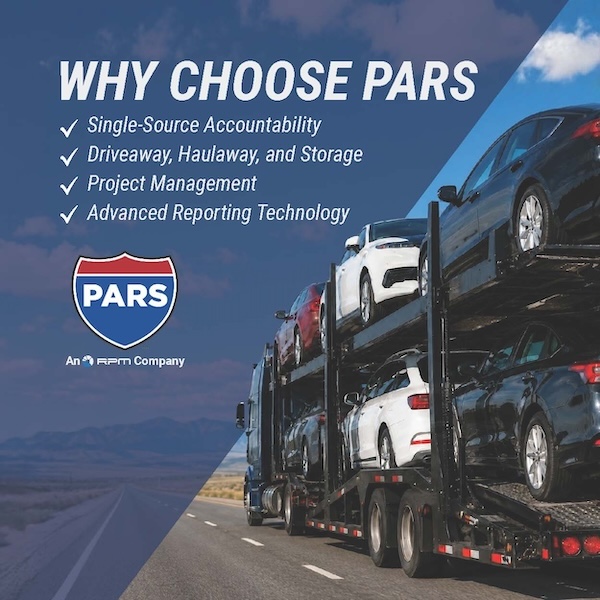
Car Dealership Transport Services: A Comprehensive Guide
Dealer transport services can provide a reliable, cost-effective solution to manage your inventory and keep your customers happy.
These companies oversee the pick-up, tracking, and delivery of vehicles. Car dealerships use transport companies for various services, such as replenishing their inventories, moving cars to different lots, or delivering vehicles to customers. These service providers are also known as vehicle logistics or vehicle fleet management companies.
A dealership’s inventory volume can make transporting vehicles a time-consuming and costly process. Working with a dealer transport company can take the stress and hassle out of car shipping.