Opus IVS Reveals Key Industry Survey Insights: Efficiency and Advanced Diagnostics Drive Success for Repair Shops
Opus IVS, a global leader in diagnostics, ADAS calibration, programming, and on-demand remote expert support, announced results from its latest industry survey, which highlights the growing focus on business efficiency and advanced diagnostic tools in automotive repair shops.
"These survey results align closely with our market perspective and reflect why we have focused for years on building collision tools that streamline workflows and deliver advanced diagnostics," said Brian Herron, President and CEO of Opus IVS. "It's this commitment to efficiency and innovation that has led four of the top five MSOs to partner with Opus IVS."

Access to Additional Fleet Vehicles When Needed, Worldwide
Free2move, the mobility brand of the Stellantis Group, provides mobility and connectivity solutions for fleets and consumers.
Streamlining Fleet Services
Patriot Fleet Solutions, an offshoot of Patriot Liner, is a one-stop-shop solution that offers "centralized access to a network of dealers,” says Henry Chedraoui, Vice President of Patriot Fleet Solutions. “Our network of dealers allows us to find localized solutions for FMCs with clients across the country.” We are impressed to see that they have already built over 1,500 vehicles in a short time, and you can read more about it HERE.
Fleet Forward in San Diego
I’m pleased to be attending the Fleet Forward Conference & Fleet Safety Conference in San Diego next week. The combined conferences offer an excellent agenda that’s geared to deliver both fantastic fleet solutions and excellent networking.
If you haven’t registered already, you can do so HERE — and if you’d like to set up a meeting you can contact me HERE.
Ted Roberts
President
Should You Top Off Your Car’s Gas Tank?
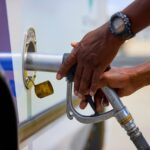
Whether we want to round up or simply get as much gas into the tank as possible, some of us top off our vehicles by squeezing in a little more, even after the pump shuts off to indicate the tank is full. Can adding that extra bit of fuel damage components in your car’s fuel system?
Adding more fuel after the gas pump clicks off can damage the charcoal canister by saturating it with fuel and cause the check-engine light to illuminate. If the onboard refueling vapor recovery (ORVR) is damaged, it won’t adequately capture those harmful vapors. The system typically lasts the lifetime of a car, but topping off could lead to an avoidable repair that could cost hundreds of dollars.
Work Truck Solutions: Q3 2024 Commercial Vehicle Market Analysis
Work Truck Solutions®, a leading commercial vehicle authority, released its Q3 2024 Commercial Vehicle Market Analysis.
While the commercial vehicle market overall continues its recovery, the interplay between new and used truck segments reveals a series of subtle yet significant indicators that warrant attention.
New work truck prices continued their ascent, rising by 0.8% from Q2 and 1.0% YoY. In contrast, used work truck prices softened, falling by 1.7%.
"The commercial vehicle market is revealing some complex dynamics this quarter," said Work Truck Solutions CEO Aaron Johnson. "While new truck inventory is steadily climbing, we're not seeing the corresponding surge of on-lot inventory in the used truck segment."