Wall Street Rewards Customer Experience Leaders
Why invest resources in customer experience strategy?
By Jeofrey Bean
What is the value of customer experience? Why invest resources in customer experience strategy? Because Wall Street rewards customer experience leaders.
You may recall from reading the book The Customer Experience Revolution - How Companies like Apple, Amazon, and Starbucks Have Changed Business Forever, that one of the pioneers in answering those questions is John Picoult, Founder & Principal and Watermark Consulting. And if you do not recall, that is fine too. Here’s a quick introduction.

AmeriFleet Promotes Long-Time Fleet Veteran Terri Stiffler to VP of Transportation Services
Ms. Stiffler, who joined AmeriFleet in 2002, has extensive fleet experience and is well- known within the industry. During her tenure she has played a number of key roles in the company's growth, progressing to increasingly more important positions. In her most recent capacity as Director of Training, she was responsible for developing and implementing comprehensive training programs for new and current employees.
"We couldn't be more excited to have a seasoned professional of Terri's caliber join our senior management team" said company Co-Founder and Chairman of the Board Bob Smith. "She's not only a superior leader, but an amazing human being. We're so lucky to have her helping define what it's all about to be an AmeriFleet employee, and how we can best work together to serve our customers."
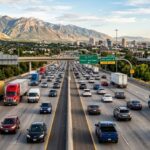
How Do You Get To Work? In A Major City, You Probably Drive Alone For 25.8 Minutes
Researchers at the University of Michigan Transportation Research Institute reviewed census data from the 30 largest U.S. cities to examine current transit stats.
They learned that, nationwide, 95.5 percent of workers have access to a vehicle for their commute. However, that figure varies substantially from city to city. In Fort Worth, Texas and San Jose, California, the figure is 98.2 percent. In New York City, however, it's just 54 percent. Washington, D.C. (72.3 percent) and Boston, Massachusetts (78.1 percent) also have relatively large populations of commuters who make do without cars.
Oregon to Tax EVs, Hybrids for Road Use
Oregon is changing the way the state plans to raise money to pay for road repairs: by the mile.
The state is enacting a plan called OreGo, where it charges drivers by how many miles they drive rather than collecting taxes on gasoline, which is the conventional method for getting the funding. The idea is helping to raise revenue because as cars are getting better gas mileage and some aren’t using any gas at all, tax revenues are dwindling.
The $8.4 million program could be the model for other states, like Michigan, struggling to find ways to maintain and upgrade sagging infrastructure as tax revenues continue to fall.
Rise of the Global Fleet Manager
This industry expert has seen more global fleet managers named within companies in the past three years than ever before.