Senators Pressuring Automakers to Improve Seat Safety
The crashworthiness of today’s vehicles are at levels not seen before, automakers claim, using a variety of test results to support the assertion. Those claims are most likely true, except for one, little-thought about part of the car: the seat back.
Two of the biggest critics of automakers, Sens Richard Blumenthal (D-Conn.) and Ed Markey (D-Mass.), are pushing the companies to address a new concern: the weakness of seat backs.
The two senators have asked 17 automakers to provide a spate of documents about their vehicles and specifically, the seat backs.

PG&E Bolstering Employee Electric Vehicle Adoption Through Workplace Charging and Incentives
Pacific Gas and Electric Company (PG&E) continued its industry-leading efforts to encourage employee adoption of electric vehicles (EV) with the opening of the largest, single-building EV charging installation in the State of California on Tuesday.
As part of its employee personal vehicle charging program, the company opened 90 additional EV charging stations at its Bishop Ranch campus in San Ramon. PG&E’s employee charging network now includes 400 level 2 chargers for employee use with plans to add an additional 200 more chargers during 2016.
Through PG&E’s Electric Vehicle Incentive Program (eVIP). employees receive a $2,000 cash incentive from the company towards the purchase of any EV or plug-in electric hybrid vehicle (PHEV) manufactured by Ford Motor Company or General Motors. Over 1,000 employees have participated in the program since its inception in December 2014.
“PG&E employees are leading the way on electric vehicle adoption,” said Dave Meisel, senior director of transportation and aviation services for PG&E. “The combination of cash incentives and our aggressive expansion of employee EV charging stations is making electric vehicle ownership viable for our employees. They now enjoy the same benefits of EV ownership that we do in our fleet, including lower total cost of ownership due to reduced maintenance and fueling costs and the environmental benefits due to reduced emissions.”
NAFA I&E in Austin Was a Success
Phil Russo gives a comprehensive rundown of the great stuff that happened at this year’s NAFA I&E in Austin, Texas.
Inside Uber’s Auto-Lease Machine, Where Almost Anyone Can Get a Car
And now Wall Street is making a $1billion bet on Uber’s lease business
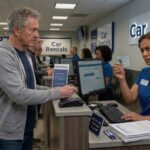
In its relentless pursuit for growth, Uber needs new drivers, and many of those drivers need cars. To help them get started, Uber has been offering short-term leases since July through a wholly owned Delaware-based subsidiary called Xchange Leasing, LLC. It partners with auto dealerships, advertises to drivers, manages risk, and even pays repo men to chase down cars whose drivers aren't making their payments.
Xchange may be key to Uber's continued expansion as it tangles with Lyft in the U.S. and a bevy of competitors abroad. Uber announced a partnership with Toyota last week to finance even more cars. This year, Uber said its financing and discount programs, which include Xchange, will put more than 100,000 drivers on the road. That requires dipping into the vast pool of people with bad or no credit.
Can Traffic Deaths Be Eliminated? NHTSA Thinks So
Toyota Motor Corp.’s James Kuffner is among a global band of safety experts proposing a radical goal for the auto industry: zero traffic deaths.
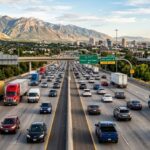
The target may be unattainable, safety advocates concede. But they say it is possible to virtually eliminate the 30,000-plus annual highway fatalities in the U.S.
Mr. Kuffner, chief technology officer at the Toyota Research Institute in Palo Alto, Calif., said that if the industry moves decisively, within a decade “the probability of being killed in a traffic accident would be smaller than being killed by lightning.”