Distracted Driving and Your Company
Distractions come in all shapes and sizes
Wind on the back of your neck can break your attention, though not as violently as a giant pitcher of flavored drink mix smashing through your wall. Regardless of how they arrive, distractions have the same affect, pulling your attention away from where it was.
But if you’re doing something that requires your complete attention? Like driving a vehicle? Distracted driving can have a major impact on your life and the lives of those around you.
If your company has a mobile workforce, that impact extends from personal life to the business world. Especially after the insights provided by the Motus 2018 Distracted Driving Report.

Webinar: Fleet Management in the Age of Electrification
Join Penske, Tesloop and TU-Automotive for an exclusive webinar (Oct 25, 11 am EST) exploring the implications for fleet management solutions as fleet electrification becomes viable.
Better understand the appetite for electric fleets and secure the cutting-edge insights to successfully develop a fleet management product roadmap specific to electrification.
LEARN MORE to discover the necessary steps that will ensure your offering increases operational efficiency and improves asset management within an EV fleet.
Should You Be Managing or Should You Be Coaching?
By Dr. Jan Ferri-Reed
Do you think of yourself more as a manager or as a Coach?
Knowing when to manage your employees and when to coach them may spell the difference between a workplace that’s wallowing in frustration or one that’s bursting with enthusiasm. The trick is to know when to wear the “manager” cap and when to wear the “coach” cap.
The classic definition of a manager is someone who “tells employees what to do in order to get things done.” But that definition of managing only goes so far. After all, we don’t get things done by simply telling our people what to do and when to do it. We also have to tell them how to do the work and why.
Taken for Granted: Driver Disengagement and Reliance on Technology Leading to Increased Road Hazards
As technology has become part of our everyday lives we have grown to completely trust and rely on it
By Carl Cormier, Senior Driving Instructor and Safety Consultant for Driving Dynamics
Technology is constantly shaping and changing our world. It is integrated into our daily lives through personal electronic devices, at work, in our homes and also, of course, in our vehicles.
Universities are devoting time and resources to studying and developing technology with the hope of educating the driver and ultimately providing a safer vehicle, and we are seeing new and dedicated areas for testing and improvement in the automobile industry.
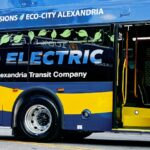
Electric Vehicles Are a Must, If We Want a Survivable World
Advocates for electric vehicles have been saying that passenger vehicles and public transit fleets will have to move from fuel-burning engines to electrification, to avoid the most dire consequences of climate change.
So far, progress has been wildly insufficient: In the U.S., close to 200,000 electric vehicles—both plug-in hybrid and battery-electric vehicles were sold in 2017, out of 17,340,700 vehicles. That’s only 1.15 percent of all cars sold in 2017. That’s a 26 percent increase from 2016, and the trend is expected to continue.
Read the article at CityLab.