Commuting Time is Shortened in Seattle With Mass Transit
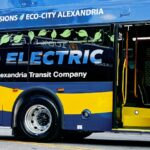
After decades as a car-dominated city, Seattle’s enormous investment in mass transit transformed the city.
Now, it's easy to live without driving every day or without owning a car at all.
Light-rail ridership is surging; after the most recent expansion, the number of daily users jumped 89 percent, to 65,100 people on an average weekday, compared with the year before.
The 4-mile trip from the university to downtown, which could take 20 minutes by car on a good day or 40 minutes on a gridlocked day, shrank to eight minutes.
Read the article at Politico.

Comcast Reduces Technician Accidents With Texting Simulator
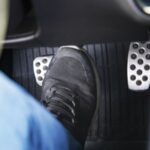
A simulator made up of off-the-shelf computer and gaming hardware is used to emphasize to Comcast’s employees just how dangerous it is to try to text and drive at the same time.
“We try to make the point that you really don’t text and drive,” Thomas Baker, the environmental health and safety manager said. “You text OR drive. You can’t really do both.”
Accidents involving Comcast technicians in the Houston region are down 26 percent year over year since the simulator was put into use.
Read the article at Houston Chronicle.
Data Study Reveals America’s Ultimate Road Trip
A road trip is a fantastic way to explore America’s vast scenery and attractions — but with so many possible routes, how do you know which is truly the best?
A new study from Geotab attempts to solve the problem by using data to rank 50 of America’s favorite road trips.
Read more at Geotab's Road Trip Ratings Study.
U.S. Postal Service Delivers Mail Using TuSimple’s Self-Driving Trucks
In a high-profile demonstration of on-highway autonomous technology, robot-trucking startup TuSimple, is operating the United States Postal Service's first self-driving truck deliveries.
Three of San Diego-based TuSimple’s self-driving semis, with a safety engineer and driver on board to monitor performance, are to complete five roundtrips hauling trailers loaded with mail between USPS distribution facilities in Phoenix and Dallas.
Read the article at Forbes.
Electric Pickup Trucks May Be Perfect For Fleet Use
Could pickups be the ticket to the high-volume sales that have eluded electric vehicles so far?
Perhaps more important to pickup giants like Ford, GM and Fiat Chrysler, could a modest slice of the pickup business help pay for the massive investment developing electric SUVs and luxury vehicles?
Electric pickups torque is ideal for towing and maybe off-roading, but EVs haven’t overcome the fact that that it takes far longer to charge a battery than fill a tank.
With short distances and good charging infrastructure, fleets operating in clearly defined areas could be ideal.
“Consumers don’t express strong interest in buying EV pickups, but fleets might,” Autotrader executive analyst Michelle Krebs said. “EV pickups may best be suited for commercial fleets, such as those owned by energy companies.”
Read the article at Detroit Free Press.