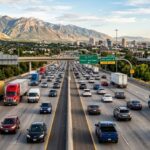
Ride-Sharing Companies Contribute Greatly to Greenhouse Gas Emissions
Beginning in 2023, California transportation network companies will be required to reduce their cumulative climate pollution.
These companies, like Uber and Lyft, are allowed to treat their drivers as independent contractors passing on all the externalized costs to their drivers—for fuel, idle time while waiting on fares, and vehicle maintenance.
The new law would ensure that companies assume their responsibility to provide core employment protections to drivers and assume their lawful responsibility to pay for employee equipment - zero emissions cars.
Read the article at CalMatters.

How Automakers Can Meet Strong 2025 Efficiency Standards
Using known fuel-saving strategies, manufacturers can make existing vehicle models that comply with emissions standards for 2025 while saving consumers money and dramatically reducing fuel consumption.
Lightweight materials can serve a dual purpose, offering both enhanced stiffness for handling and safety while also reducing the amount of power needed to move the vehicle.
As an example, VW has already developed the 1.5L “evo” engine and 48V mild-hybrid system deployed now in Europe could drastically reduce fuel used by the next generation Jetta.
Read the article at Union of Concerned Scientists.
Frankfurt Auto Show: Electric Cars To Dominate, But Will They Sell?
In 2018, battery electric vehicles (BEVs) had a market share of close to 2% in Europe. Investment bank Morgan Stanley predicts the global market share of BEVs will only reach close to 10% by 2025 and just over 20% by 2030.
If that turns out to be true, manufacturers like VW and all its main competitors will be financially embarrassed, if not ruined, because their expensive plans assume a sales rate of more than twice that.
“Electric cars pose some challenging environmental questions. Extraction of minerals and the question of disposal of batteries at the end of life, and the resources required are enormous. Mining of cobalt for batteries poses big problems, with the ups and downs of demand being met by poor people in dangerous forms of mining. There is an increasing awareness of these issues,” Cardiff Business School’s Professor Peter Wells said.
Read the article at Forbes.
How Amazon Avoids Liability For Delivery Crashes
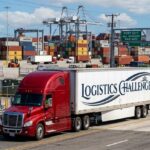
Amazon has built a huge logistics operation to get more goods to customers’ homes in less and less time by creating a network of contractors and avoiding the costs of taking on permanent employees.
More than 60 accidents have occurred since June 2015 involving Amazon delivery contractors that resulted in serious injuries, including 10 deaths. Amazon argues that it bears no legal responsibility.
“Logistics experience not required,” says an ad on an Amazon website, enticing aspiring entrepreneurs to start their own delivery contracting businesses with Amazon’s help. But the notion that anyone can do this kind of work belies the fact that being a delivery driver is among the deadlier jobs in America, according to data from the United States Bureau of Labor Statistics.
Read the article at ProPublica.
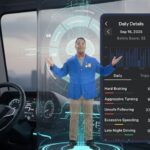
FICO and eDriving Release Latest Version of FICO Safe Driving Score
With over 1.3 million trips completed per month using the FICO Safe Driving Score, fleet managers and drivers have a consistent and objective measure of driver risk
FICO, in partnership with eDrivingSM, have launched the latest version of the FICO® Safe Driving Score in eDriving’s smartphone-based driver risk management solution, Mentor by eDrivingSM. FICO® Safe Driving Score 2.0 has been optimized to better predict the likelihood of future collisions, enabling fleet managers to more effectively mitigate risk, lower costs, and keep drivers safe.