Electric Vehicles Save Motorists Thousands
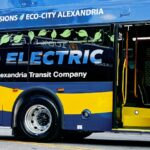
Motorists can save as much as $14,500 on fuel costs over 15 years by driving an electric vehicle (EV) instead of a similar one fueled by gasoline, according to a new analysis conducted by researchers at the U.S. Department of Energy’s (DOE’s) National Renewable Energy Laboratory (NREL) and Idaho National Laboratory (INL).
Previous studies assumed a singular value for the cost to charge an EV, but this new work provides an unprecedented state-level assessment of the cost of EV charging that considers when, where and how a vehicle is charged, and considers thousands of electricity retail tariffs and real-world charging equipment and installation costs. The cost of charging is compared against the price of gasoline to estimate total fuel cost savings over a vehicle’s lifetime.
“Finding out the purchase price of a vehicle is relatively simple, but the savings related to fuel aren’t readily available, especially since electricity cost varies greatly for different locations and charging options,” says Matteo Muratori, a senior systems engineer at NREL and co-author of the article, “Levelized Cost of Charging Electric Vehicles in the United States.”
Read the article at NGT News.

Webinar: Fleet Business Strategies During the Pandemic and Recovery Afterward: What Practices Will Become Permanent?
Hear insights and fresh ideas provided by a panel of award-winning fleet managers -- including three previous #1 fleets -- on a free webinar offered Thursday, June 25 from 2 to 3:30 p.m. EDT. This webinar will discuss solutions to the #1 issue facing fleets in 2020 (besides the disease) -- the shortage of technicians during COVID-19 and beyond.
These best practices will be led by Robert Gordon, NAFA's 2018 Fleet Excellence award winner for Outstanding Achievement in Public Fleet Management. The webinar will be interactive with your questions, comments and ideas. Experts in emerging technologies that are changing how the industry works will also be presenting.
A Winning Start!
Imagine: you start a great new job to lead a fleet management services firm on Friday, March 13, 2020. All over the world that day many countries are confirming their first cases of the novel coronavirus, the Louvre Museum in Paris closes, Delta Airlines stops flying to Europe, and a national emergency is declared from the White House. Three days later you begin shutting down the company’s corporate location, home of an award-winning call center. And you do it successfully!
This once-in-a-lifetime story belongs to Terry Winslow: The COVID-19 Pandemic Greeted the President at The CEI Group. How He and His New Company Coped.
We mourn the loss of Milton Reid, former president of NAFA and highly-respected member of our fleet community. Milton passed away on June 24 in Gainesville, Georgia. Our hearts go out to his family and friends.
Have a safe and happy 4th of July!
Janice Sutton
Editor in Chief
"America was not built on fear. America was built on courage, on imagination and an unbeatable determination to do the job at hand." ~ President Harry S. Truman
Geotab Launches Public Works Solution for Government Fleets
Market-leading solution helps enable state and municipal government agencies to improve their fleet operations through superior integrations and improved visibility; Increases operational efficiencies for seasonal and ongoing maintenance vehicles
Toronto, ON – June 23, 2020 – Geotab, a global leader in IoT and connected transportation, today announced the North American launch of its Geotab Public Works solution. The all-in-one solution offers fleet managers full visibility into the operational data of all government vehicle types on one single platform and provides the toolsets to effectively remain compliant, reduce costs and maintain road safety.
“As many governments continue to look for ways to optimize their operations, Geotab Public Works is the type of robust, scalable, secure solution that provides real value by giving government fleet managers and local constituents unprecedented visibility to their public services,” said Jean Pilon-Bignell, Vice President of Business Development, Government and Smart Cities at Geotab.
Benchmarking Study Reveals the 10 States with the Best Drivers
A national study of driver records by Insurify, an online auto insurance broker, has found that no one region of the U.S. has better drivers than any other, but did identify the 10 states with the best average driver records.
The top five, in descending order, were Michigan, Kentucky, Mississippi, Nevada and Florida. Rounding out the top ten were West Virginia, Connecticut, Arizona, New Jersey and Texas.
The rankings were calculated based on five factors: the number of licensed drivers in each state, the total number of traffic fatalities per 100,000 motorists in 2018, and the percentages of licensed drivers with at least one of 20 different traffic violations in the past seven years, a speeding ticket, and an at-fault accident.
In total, the study found that 24 percent of all drivers have committed at least one moving violation, more than 12 percent have had an at-fault accident and nearly 12 percent have been cited for speeding. It also calculated that there were 11.2 traffic deaths per 100,000 U.S. motorists in 2018.
Read the article at Insurify.com.