How to Identify Risky Drivers
By Trent Dressen, Director of Sales, SuperVision
It is the top priority of most businesses that rely on drivers, whether they employ professional drivers, a few salespeople, or a large crew of workers that drive as a function of their job.
Developing an ingrained safety culture and a comprehensive safety program delivers a positive impact on any company’s bottom line.
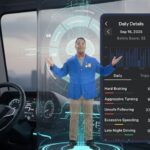
Comprehensive safety programs come in many shapes and sizes from self-reporting policies to keep the driver manager aware of any possible issues, point systems to identify when actions should be taken, to driver training programs to address high-risk behavior and keep safety top of mind. Fleets are constantly in search of ways to offset risk with new technologies and safety programs.
Before a true safety culture can be effective, driver and fleet managers must understand the level of risk an irresponsible driver poses to their organization. Entrusting a driver with a company vehicle or entrusting them to drive their own vehicle on company time, is a big risk. If the driver is not prepared to adhere to safety regulations, they are a risk that is not worth taking.

The Political Economy Of Autonomous Vehicles
The Covid-19 pandemic has certainly provided a lens into how the loss of vehicle related revenue wreaks havoc on the budgets of towns, cities and states.
No matter how much of an improvement autonomous vehicles may bring, there will be economic consequences that in turn will have political implications - elected officials will need at act quickly and in a way that least impacts the everyday driver and the public at large.
Autonomous vehicles are programmed to obey traffic laws and comply with regulations of operating on the roadways. The loss of millions of dollars of vehicle infraction violations, drivers license, meter and garage parking fees that many cities use to plug the holes in their budgets, could be eliminated.
Read the article at Forbes.
Elizabeth Schlicht Takes the Helm at AFLA
Like many of you in the corporate fleet world, FMW has enjoyed working with Elizabeth Schlicht in her past 6 years at AFLA, and we are quite pleased to see her move into the role of Executive Director.
Ford Launching Hands-Free Active Drive Assist System in 2021
Ford is getting ready to roll out its first long-range battery-electric vehicle later this year, and the new Mustang Mach-E also will become the automaker’s first model to get the new, hands-free Active Drive Assist technology.
Active Drive Assist will permit motorists to take their hands off the wheel for an extended period while driving on 100,000 miles of U.S. limited-access roadways that have been mapped using high-resolution technology.
“The stress of long highway drives remains a huge issue for drivers around the world,” said Hau Thai-Tang, Ford’s chief product development and purchasing officer. “By introducing driver-assist technologies like Active Drive Assist, Ford’s version of hands-free driving, we’re allowing our customers to feel more confident whenever they’re behind the wheel.”
Read the article at The Detroit Bureau.
How Working From Home Could Save 11 Billion Road Miles, Cut Emissions
Maintaining remote working after the coronavirus lockdown in the U.K. could cut two airports’ worth of emissions and eliminate 11.3 billion miles of commutes, a British clean air campaign has found.
Researchers found that people’s experience of cleaner air and quieter streets has bolstered support for changing conventional ways of working.
According to the U.K. Centre for Ecology and Hydrology, pollution in some British cities fell 60% during lockdown. Data from Breathe London, managed by the charity Environmental Defense Fund Europe, show levels of levels of nitrogen dioxide, which harms the lungs, fell 20-24% in central London.
Read the article at Forbes.