Booster Appoints VP of Account Management as Its Customer Base Doubles
Booster announced the expansion of its executive team, appointing Ericka Ramon as Vice President of Account Management and Support. Ramon will manage the Booster client experience at a time of extraordinary growth.
"As Booster's fleet and consumer businesses both grow, bringing Ericka to our executive team will help us enormously," said Frank Mycroft, CEO and co-founder of Booster.
"We always want our customers to have positive experiences, and Ericka's background supporting enterprise clients at large-scale logistics companies will enable us to make sure they do," he said.

Data: A Fleet Manager’s Most Effective Safety Tool
By: Kevin Aries, Global Product Success Lead for Verizon Connect
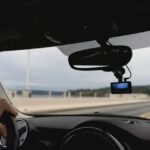
With distracted driving rapidly becoming one of the biggest reasons for accidents on the road today, it’s important to arm fleet managers with the tools to manage and mitigate these factors effectively.
According to the National Highway Traffic Safety Administration (NHTSA), about nine people die each day as a result of distracted driving, and another 1,000 injuries occur daily in accidents that reportedly involve a distracted driver.
As fleet managers look to minimize distracted driving incidents and the costs that come with them, fleet management technology has proven to be an important tool for managers to better address the safety of drivers.
Buttigieg “Unaware” of Plan to End Gas-Powered Vehicle Sales Despite Democrats Pressure on Biden
The Biden administration’s pro-EV stance doesn’t necessarily require the elimination of gas- and diesel-powered vehicles at the same time, according to Transportation Secretary Pete Buttigieg.
He did acknowledge the efforts of General Motors and other automakers looking to end production by 2035, but noted he’s not “heard of that in a mandatory context but that certainly seems to be where the U.S. auto industry is headed.”
The push comes from California, which implemented the ban last year, and the state’s two U.S. Senators, Dianne Feinstein and Alex Padilla. The duo sent President Joe Biden a letter last week asking him to set a timetable for phasing the sale of those vehicles. Biden came out against the plan during the campaign.
Read the article at The Detroit Bureau.
The Fleet of the Future Is Right Around the Corner—Complete with Connected and Electric Vehicles
Escalent Fleet Advisory Hub™ data indicate COVID-19 pandemic did not slow adoption of new technologies among fleets
Escalent, a top human behavior and analytics firm, has unveiled the 2021 Fleet Technology Index, the latest study released from Fleet Advisory Hub™, the company’s commercial and fleet vehicle data solution.
The report provides a look at fleet decision-maker sentiments and adoption plans for an array of technologies that, taken together, forecast the future of the fleet industry.
Vehicle Mileage Tax Could be on the Table in Infrastructure Talks, Buttigieg Says
A vehicle mileage tax could be on the table in talks about how to finance the White House’s expected multi-trillion-dollar infrastructure proposal, according to Transportation Secretary Pete Buttigieg.
“When you think about infrastructure, it’s a classic example of the kind of investment that has a return on that investment,” he said. “That’s one of many reasons why we think this is so important. This is a jobs vision as much as it is an infrastructure vision, a climate vision and more.”
Democrats have slowly pivoted away from a gasoline tax in favor of a mileage tax amid a simultaneous, climate friendly effort to encourage consumers to drive electric cars.
Read the article at CNBC.