Motivating Government Fleet Employees Without Using Money
The NYPD’s Deputy Commissioner’s approach
Janice Sutton:This article was written by the late Mark Boada and appeared in Fleet Management Weekly in August, 2020, but it is as timely today as it was last year.
Mark Boada -- 2020
In this time of looming cuts in government budgets, prompted by the COVID-19 recession, public sector fleet managers may be wondering how to keep their technicians, administrators and managers motivated without meaningful pay increases and opportunities for overtime.
Nine years ago, Robert Martinez, then a manager within the New York Police Department’s fleet, presented a paper on that subject to fellow students at the Harvard Kennedy School of Government’s program for senior executives in state and local government."
Today, Martinez, who holds a bachelor’s degree in electrical and mechanical engineering from the City University of New York and a master’s degree in executive management from New York University, is the NYPD’s deputy commissioner for support services, which includes responsibility for the department’s entire 10,000-vehicle fleet and more. In these edited excerpts from his 2011 paper, Martinez presents the management principles he continues to stand by and to which he credits much of the success of his 900-member organization.

eDriving Webinar: Speeding and High Risk Behaviors: Steering Drivers to Safer Actions
Research shows that aggressive drivers tend to be involved in more traffic collisions.
And, above a certain minimum level of on-road competence, research shows that it’s a driver’s attitudes that make them much more likely to crash.
This webinar, timed to coincide with the speed-themed UN Global Road Safety Week (May 17-23), and presented in conjunction with the Global Road Safety Partnership, will examine the effects of speeding, one of the most dangerous on-road behaviors. It will look at the relationship between minor increases in speed and collision impact and outcome, and explain why speeding doesn’t always mean breaking the speed limit or driving to the extremes. Additionally, it will consider other high-risk behaviors, in particular, the “Triple Threat” of Speeding, Distraction and Fatigue.
Your Car is Spying on You, and a CBP Contract Shows the Risks
U.S. Customs and Border Protection purchased technology that vacuums up reams of personal information stored inside cars illustrating the serious risks in connecting your vehicle and your smartphone.
The push to make our cars extensions of our phones makes them tremendously enticing targets for generously funded police agencies with insatiable appetites for surveillance data. A “vehicle forensics kit”, manufactured by American company Berla, can reveal where you’ve driven, what doors you opened, and who your friends are.
Civil liberties watchdogs said the CBP contract raises concerns that these sorts of extraction tools will be used more broadly to circumvent constitutional protections against unreasonable searches. “The scale at which CBP can leverage a contract like this one is staggering,” said Mohammad Tajsar, an attorney with the American Civil Liberties Union of Southern California.
Read the article at The Intercept.
The 16 Most Successful Excuses to Avoid Speeding Tickets–CarInsurance.com 2021 Survey
In a third annual survey of driver's habits, CarInsurance.com finds the excuses that are most successful when stopped for exceeding the speed limit and explains why and by how much drivers speed.
Offering an excuse when pulled over for speeding can work. Nearly 50% of survey respondents say they avoided a ticket by giving an excuse, which is about double the success rate reported in last year's survey. The complete research is available: 2021 caught speeding survey: successful excuses.
Top excuses in this year's survey results include:
I didn't know I was speeding -- 26%
Medical emergency -- 25%
Everyone else was going the same speed -- 22%
Late for work -- 21%
I had to use the bathroom -- 20%
Read the article at PR Newswire.
Why Electric Cars Can’t Come Fast Enough
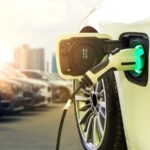
Through all the turbulence of the past year, a source of enormous hope for the health of the planet has emerged: the automotive industry is shifting toward electric vehicles (EVs) even faster than we envisioned only a year ago.
Steering the fight against climate change on course will require most markets to speed up the EV transition even further. For the EU to achieve its Green Deal targets, for example, it would need to reduce light-vehicle emissions by 90% by 2043—seven years sooner than currently forecasted—to compensate for its car parc emissions.
Strong signals from governments have further encouraged General Motors, Volvo, Jaguar, and many other leading OEMs to push more forcefully into electrification, with a growing number pledging to phase out ICE powertrains altogether. Growing investment into supply chains, charging infrastructure, and upgraded electrical grids will also help make these goals achievable.
Read the article at BCG.