How Will Your Car Serve You?
Remember when phones were primarily devices used for phone conversations? It seems quaint, now that smartphones have evolved to become mobile information hubs for our needs on the go. Voice calling is so 2000.
Remember when we used to think of automobiles primarily as transportation devices to get us from point A to B? Oh, wait. That’s how most of us still think of cars. But not for long.
The transformation has begun and in a few years, the idea that a car’s sole purpose is transportation — will also seem quaint.

How To Handle These Scary Automotive Situations
Most motorists don’t heed advice about known hazards until they happen to them or someone they know. If you write about safety issues long enough, you’ve interviewed a lot of people with first hand experience. And few things stay with you longer than those first-person tales.
Consider the horror that befell Kids and Cars founder Janette Fennell and her family in 1995. She and her husband were carjacked, robbed and left in their trunk in an remote location. They escaped, but didn’t know the fate of their infant son until they arrived back home to find him sitting in his baby seat unharmed in the driveway.
She went on to found the advocacy group Kids and Cars and successfully lobbied to get trunk releases required in all new vehicles.
READ MORE for advise on staying safe.
Donlen Invests in Its People
Donlen recently went through a 'growth pyramid' exercise as a company, and it reinforced that their employees are one of their key foundations. Consequently, they are doing even more to make sure that they are an 'employer of choice.'
Study Finds Toyota’s Hands-Free System is Best
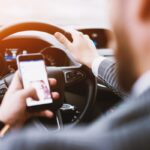
Automakers are coming out with a multitude of hands-free systems, which are supposed make it safer for drivers to stay in touch with the world outside of the car and in command of the inside.
However, the AAA Foundation for Traffic Safety claims research shows hands-free systems like Apple’s Siri, General Motors’ MyLink and Ford’s Sync that are designed to limit distracted driving may have the opposite effect.
“We already know that drivers can miss stop signs, pedestrians and other cars while using voice technologies because their minds are not fully focused on the road ahead,” said Bob Darbelnet, chief executive officer of AAA.
READ MORE about the findings.
How Could Traffic Enforcement Play Out On Roads Of The Future?
On the roads of the future, it’s possible that speeding tickets will be doled out by new automated law enforcement systems instead of by police officers in patrol cars.
Systems now being developed by the federal government to handle vehicle-to-vehicle and vehicle-to-infrastructure communications in an upcoming connected-car era may have the capability to more precisely track the locations and speeds of individual motorists.