Robot Cars Won’t Retire Crash-Test Dummies Anytime Soon
Judging from headlines, one might think dealer lots are brimming with cars that allow drivers to clock out while radar, cameras and other sensors do the navigating.
Though the U.S. market is inching toward that reality, consumers can't buy a fully self-driving car and likely won't be able to for many years.
The idea is tantalizing, not only for the convenience factor but also because it dangles the potential of a crash-free future. While that vision may one day come to fruition, it is far too early to retire the Institute's crash-test dummies. There will be many crashes on the road to Vision Zero.

Why the Department of Transportation’s Self-Driving Car Guidelines Aren’t Enough
Ford, GM, Toyota and VW are just a handful of the car manufacturers planning to put self-driving cars on the road in the next five years.
If you ask Uber or Tesla, they might say driverless cars have already arrived… which means we’re running out of time to secure one of the juiciest new targets for hackers.
Hacking a car is easy. Just ask Tesla, Jeep or Mitsubishi. As self-driving cars reach the masses, they’ll dramatically raise the stakes for cybersecurity. If your computer gets hacked, it can be costly. If your car gets hacked, it can be deadly.
The Department of Transportation’s (DoT) recent guidance on self-driving cars is a good start in addressing cybersecurity, but leaves a lot to be desired. Granted, the DoT does admit its lack of technical expertise, and requests special hiring tools to attract security experts who can best vet this new technology.
Climate Change May Be Escalating so Fast it Could be ‘Game Over’, Scientists Warn
New research suggests the Earth's climate could be more sensitive to greenhouse gases than thought, raising the specter of an 'apocalyptic side of bad' temperature rise of more than 7C within a lifetime
It is a vision of a future so apocalyptic that it is hard to even imagine.
But, if leading scientists writing in one of the most respected academic journals are right, planet Earth could be on course for global warming of more than seven degrees Celsius within a lifetime.
And that, according to one of the world’s most renowned climatologists, could be “game over” – particularly given the imminent presence of climate change denier Donald Trump in the White House.
A Vehicle’s Sound System Can Be a Matter of Life and Death
Adjusting the acoustics of modern automobiles is not only about comfort or pizazz. There are safety considerations, too.
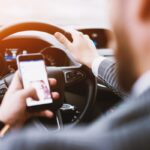
Advanced driver-assistance features like lane departure warnings, automated braking systems and vehicle or pedestrian proximity alerts generate their own bells and chimes. But such sonic alerts can create dangerous distractions, leaving drivers unable to determine which sounds are critical.
We spend a lot of time tuning those beeps and pings and assessing the quality of the chimes,” said Alan Norton, senior technical leader for audio quality at Ford Motor.
Will Pedestrians and Cyclists Bully Self-Driving Cars?
A fascinating study has come out of the University of California, Santa Cruz.
Adam Millard-Ball writes in the Journal of Planning Education and Research about how in a world full of self-driving cars, pedestrians may have the run of the street and be able to do whatever they want, since the self-driving cars, or autonomous vehicles (AVs) will give them right of way. Now, even though walking people often have the right of way now in intersections, they tend to yield to cars.
Pedestrians know that drivers typically have no interest in running them down. So why not simply step out into the street and assert the right of way?