Coming From Automakers: Voice Control That Understands You Better
Every once in a while, just for laughs, Kevin Smith-Fagan tries to call a friend of his, Priscilla, using the voice-recognition system in his 2013 Chevrolet Volt.
“I’ve tried it so many times and it never gets it right,” said Mr. Smith-Fagan, an executive at a public television station in Sacramento. “It always thinks I’m saying ‘Chris,’ and I have like five people named Chris in my phone book, so it’s always interesting to see who’s getting the call.”
Voice control systems have been in cars for more than a decade, and great strides have been made in the technology’s ability to understand human speech.

Ford Introduces New Autonomous Development Vehicle, Expands Test Fleet To 90 Cars
2017 will go down as the year that autonomous cars swarm the roads in certain states to test and refine the technology.
Google is expanding its stable of self-driving test vehicles via deals with Fiat Chrysler and now Honda, while Uber launched a fleet of autonomous Ford Fusions in Pittsburgh earlier this year and is expanding to Arizona after running afoul of the law in California.
And GM announced plans this month to immediately start testing autonomous Chevy Bolts on roads around Detroit after dispatching 40 of the self-driving EVs to San Francisco and Scottsdale, Arizona for similar purposes.
New Mobility is Challenging Automakers’ Assumptions
Whether you regard “new mobility” as an over-hyped trend of the moment or a preview of our future, it threatens the foundation of an auto industry built on the premise that more is better.
Indeed, there are a slew of unanswered questions.
Do we really want robots driving us around? Won’t they eliminate jobs? Can anyone make money at this?
Your Car Wants to Say Hello. And That’s Only the Start.
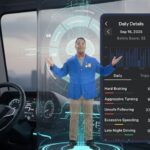
Toyota’s empathetic car of the future is there for you.
You’ve had a frustrating day at work; it plays soft music and lowers the temperature. You’re lost in an unfamiliar neighborhood; it offers to take over the driving.
You start to nod off at the wheel; it taps you on the shoulder and starts up a conversation.
The auto industry’s pursuit of a hyper-personal experience comes as the very nature of automotive transportation is in flux. Many industry observers expect ride-sharing services will become more popular, with autonomous driving to follow. People may rely less on personal cars to get around, a prospect that is “going to change the business model of private car ownership dramatically,” said Karl Brauer, a Kelley Blue Book analyst.
BMW and Intel to Bring a Fleet of Self-Driving Cars to the Road by the End of 2017
In a surprisingly collaborative move, BMW has revealed that it wants to share data and development expertise with competitors to ensure the driverless car future.
Offering more detail on its roadmap for rolling out its own autonomous cars, BMW, working in collaboration with Intel and Mobileye, an Israeli tech company that develops vision-based driver assistance systems, says it will put a fleet of 40 autonomous test vehicles on the roads by the second half of 2017.
At a joint press conference at the Consumer Electronic Show in Las Vegas, the three companies stated that the BMW 7 Series will employ the latest Intel and Mobileye technologies during global trials starting in the US and Europe.