Changing Times
The new Trump administration has unsettled the auto industry. Threats to renegotiate or pull out of NAFTA, diplomatic disputes with Mexico, and Trump's hotly-contested immigration order are just a few of the areas of concern.
In Manheim's 2017 Used Car Market Report, Tom Webb, chief economist for Cox Automotive, reassuringly says, "... although there is looming uncertainty about the economic climate in 2017, the prospects are still good that the seven-year recovery in the automotive industry will continue.”
Senior editor Mark Boada writes about crash-avoidance technology in his column. What could go wrong? Driver complacency. He says, “…drivers can become less vigilant and pay less attention when they believe their safety equipment is doing all the work.”
Janice Sutton
Editor in Chief

New Auto Tech Gives Way to More Safety, Comfort
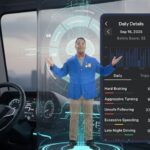
Companies crafting the vehicles of the future say the machines will be safer, more comfortable and infinitely more useful once they’re programmed to drive themselves, which is leading some to drastically change interior layouts.
New technology is being deployed inside mock “cockpits,” and companies are developing prototypes and concepts with tactile surfaces, digital displays, biological sensors in seats, retractable screens and trays, augmented-reality screens and advanced alert systems all aimed at making a driver safer and more comfortable.
Only One In Four Americans Trust Autonomous Vehicles Right Now
The auto shows this month may have been nothing short of a driverless-tech wonderland, but carmakers have to participate in trust falls with consumers, or some sort of icebreaker, if they’re serious about bringing about an autonomous revolution.
The findings from a new Deloitte study suggest nearly 75 percent of the U.S. doesn’t believe self-driving cars will be safe. Damn.
The study surveyed 22,000 consumers from 17 countries on self-driving cars, powertrain systems and their willingness to spend for the high-tech gadgetry, but the biggest takeaway was the level of trust in AV technology.
Is Amazon Moving into the Autonomous Vehicle Industry?
A newly granted patent may give us some hints as to what the service giant has up its sleeve.
Amazon has a whole bunch of ideas up its sleeve, some of which are a bit more... interesting than others. One of its latest patents tackles a problem that could affect a wide swath of future self-driving cars.
The US Patent and Trademark Office just granted Amazon a patent for a system that deals with self-driving cars and reversible lanes. After all, how would a self-driving car handle a lane that could hold oncoming traffic at seemingly arbitrary times?
Trump Threats Could Inadvertently Encourage More Mexican Auto Investments
President-elect Donald Trump's repeated attacks on Mexican auto imports has collapsed the peso — which has ironically made Mexico a more inviting location for American manufacturers.
Trump has repeatedly warned automakers they could be hit with a 35 percent tariff on imports, but some observers believe such threats could actually make it more attractive to invest south of the border.
Several high-level auto industry officials told NBC News that a sharp slump in the price of the peso could more than offset any import tariffs, leading them to consider new Mexican manufacturing options.