Association News Archive
NAFA’s Next Webinar: EMV, Mobile, and the Future of Fleet Payments – Register Now!

Technology Articles
Dyson to Make Electric Cars From 2020
Cell Phone Use Leads to Blindness—But Organizations Can Help Deliver the Cure
Every time a person drives and engages in a cell phone conversation, the driver and everyone else sharing the road with this person are at risk
By Art Liggio, President, Driving Dynamics
Studies from major universities have concluded that when you speak on a cell phone—and this includes hands-free use, a phenomenon known as “inattention blindness” occurs. Simply stated, this is a person’s inability to perceive things which are in plain sight because the brain has prioritized and assigned its processing capacity elsewhere.
Tomorrow’s Transportation Ecosystem: From Autonomous Vehicles to Public Transit
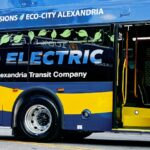
There is growing evidence that tomorrow’s urban cars will be “safe, green and connected,” Mary Gustanski, Delphi’s vice president of engineering, recently told Car Talk. “We’re going to see more electrification, and the electric car will merge with automated driving and the connected car.”
Electric vehicles (EVs) now hold just a 1% share of the global fleet on the road, but it could comprise 15% to 35% of total global new vehicle sales by 2040, according to IHS Markit. Worldwide sales are up more than 1,000% since 2010.
In Europe and China, where regulation encourages plug-ins, EVs could be more than half of new passenger vehicle sales by 2040 — the same time fully autonomous cars are expected to rule the roads.
Excellent Long-Term Quality Isn’t Exclusive to Luxury Brands, J.D. Power Finds
While Lexus and Porsche nameplates lead the industry in vehicle dependability, owners of many high-volume vehicles are also rewarded with excellent long-term quality, according to the J.D. Power 2017 Vehicle Dependability StudySM (VDS), released today.
The study, now in its 28th year, examines problems experienced during the past 12 months by original owners of 2014 model-year vehicles. Overall dependability is determined by the number of problems experienced per 100 vehicles (PP100), with a lower score reflecting higher quality.