Truemag

  • Newsletters
  • Thought Leadership
  • Mobility
  • Safety
  • Work Trucks
  • Videos
  • Home
  • Subscribe
  • Contact Us
  • Media Kit
  • Who We Are

Tomorrow’s Transportation Ecosystem: From Autonomous Vehicles to Public Transit

Wharton

There is growing evidence that tomorrow’s urban cars will be “safe, green and connected,” Mary Gustanski, Delphi’s vice president of engineering, recently told Car Talk. “We’re going to see more electrification, and the electric car will merge with automated driving and the connected car.”

Electric vehicles (EVs) now hold just a 1% share of the global fleet on the road, but it could comprise 15% to 35% of total global new vehicle sales by 2040, according to IHS Markit. Worldwide sales are up more than 1,000% since 2010.

In Europe and China, where regulation encourages plug-ins, EVs could be more than half of new passenger vehicle sales by 2040 — the same time fully autonomous cars are expected to rule the roads.

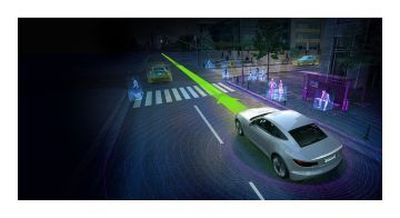
The auto industry is moving toward the self-driving car; and semi-autonomous cars — able to operate hands-off, but with a driver behind the wheel — are already on sale.

According to Deloitte, the shift to take our hands off the wheel “could occur more quickly and at greater scale than many are prepared for, especially in densely populated areas.” Cities will probably be the first laboratories for autonomous technology.

Will these vehicles simply replace our current private cars? Maybe not. With cities in the vanguard, we seem to be evolving toward a growing reliance on shared fleet cars. “We will primarily see autonomous cars in on-demand mobility fleets,” said Sam Abuelsamid, a senior research analyst at Navigant Research. “There’s a distinct possibility that consumers will never actually be able to buy them.”

As Abuelsamid pointed out, there are good reasons for fleet ownership of self-driving cars, including the fact that maintenance will be critical. “Once a car is sold to a consumer, the manufacturer no longer has control over which parts are put on that vehicle, and when we’re talking about the sensors that control the car, it’s critical that they not be replaced with cheap, off-brand parts,” he said. But poor-quality parts could also be outlawed by regulation.

Robin Chase, co-founder of Zipcar, argued that serving our transportation needs with fleets of autonomous electric cars is an ideal scenario for these reasons. “Simply eliminating the drivers from cars, and keeping everything else the same, will be a disaster,” she said. “If we share rides in shared cars, we will only need 10% of the cars we have today. … We have the ability to eliminate congestion, transform the livability of cities, make it possible to travel quickly and safely from A to B for the price of a bus ticket, improve the quality of our air, and make a significant dent in reducing carbon dioxide emissions,” she said.

Read more of the original article at Wharton.


Feb 27, 2017connieshedron
Excellent Long-Term Quality Isn’t Exclusive to Luxury Brands, J.D. Power FindsCell Phone Use Leads to Blindness—But Organizations Can Help Deliver the Cure
Recent Posts
  • IMPROVLearning: How Comedy, Behavioral Science and AI Improve Fleet Safety
  • Improving Productivity with AI: Turning Fleet Data into Faster Decisions
  • National Safety Council Projects Increased Traffic Crash Risk during Fourth of July Weekend
  • Keep Every Heavy-Duty Maintenance Inspection on Track — Free Fullbay Checklist
  • Gain Data-Driven Insights into Commercial Vehicle Market Trends at Executive Leadership Summit
  • Last Chance to Save: Register for NAFA’s Maintenance Workshop
  • License Plate Cameras Are About to Start Tracking a Lot More Than Just Your Car
  • America’s Heavy EV Problem May End with Drivers Paying More
  • Trends in U.S. Drivers’ Perceptions and Attitudes Toward Vehicle Automation, 2019–2025
  • 2026 NETS Strength IN Numbers Conference: Early Bird Rates!
ASSOCIATION NEWS
Last Chance to Save: Register for NAFA’s Maintenance Workshop
How AFLA Is Positioning Itself for the Future of Fleet Mobility
‘Raise Your Hand and Get Involved’
NAFA Names 2026 Class of Fellows, Honoring Leaders in Fleet Management
Award Winners Honored at NAFA I&E
2026 NAFA I&E Seeks to Change Perceptions, Invigorate Fleets
NAFA Announces Lineup for Media Day at I&E 2026: Industry Leaders to Showcase the Latest Innovations
TECHNOLOGY
Improving Productivity with AI: Turning Fleet Data into Faster Decisions
Fleet Operations Are Changing – The Industry Needs to Evolve With Them
AI-Powered Vehicle Inspections Move Beyond the Checklist
Motive’s New Workforce Capabilities Aim to Improve Performance, Automate Rewards
AI + Human Insight: Why Fleet Leaders Need Both to Win in 2026
NTSB Finds Automation Overreliance Contributed to Two Fatal Ford BlueCruise Crashes
New AI Assistants Automate Fleet Data Analysis, Decision Making and More
CONFERENCES & WEBINARS
2026 NETS Strength IN Numbers Conference: Early Bird Rates!
AFLA 2026 – Keynotes Announced!
Private Fleets Flex at National Private Truck Council Conference
Free NAFA Webinar: Manage Your Fuel Cost Volatility
Registration Now Open for NETS Annual Conference
Early Bird Pricing for AFLA 2026 – Ending June 1
NAFA Online Seminar: Essentials of Fleet Management
INDUSTRY ANNOUNCEMENTS
Union Leasing Becomes Moventum Fleet Management as 70-Year Company Accelerates into Next Phase
Fleetio Wins Innovations Award at NAFA’s 2026 Institute & Expo
WIFM is heading to NAFA!
Cox Automotive Unveils Cox Fleet, Setting a New Standard for Fleet Uptime Nationwide
AFLA Canadian Fleet Professional of the Year Award: Nominations Open!
NAFA Webinar: Kickoff the 2026 100 Best Fleets Contest on December 4!
Join NAFA’s Free Fleet 101 Live Course

Fleet Management Weekly Newsletter Archive
Access to back issues of the FMW newsletter.

FMW Mobility
How mobility is rapidly changing the fleet management landscape.

Newsletter

Subscribe

FMW Fleet Videos
Video clips of industry leaders speaking on a variety of engaging hot topics in fleet.

2014-2020 © Fleet Management Weekly