How Green is Green?
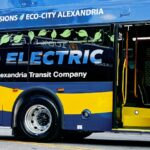
In order to produce fewer greenhouse gas emissions than a battery-electric vehicle, gas-powered vehicles need to average 55.4 mpg in the United States or 51.5 mpg worldwide.
A new study by the University of Michigan Transportation Research Institute determined that generating electricity for a full charge creates more carbon dioxide emissions where coal or oil is the main source of providing power.
"The reasons for conducting such a country-by-country comparison are that the indirect emissions from (battery-electric vehicles) depend on the mix of fuel sources used to generate electricity and countries differ widely in their fuel-source mix," UMTRI researcher Michael Sivak said in a news release.
Read more of the original article at Detroit Free Press.

We Give Thanks
We sure like Art Liggio’s column Fleet Safety’s Quiet Company, Not So Quiet Anymore, wherein Art shares his thoughts on Driving Dynamics' journey, recent strategic investments and how they are positioned for growth.
Thinking of the ramifications of negligent entrustment, we were shocked when Dillon Blake, senior director of business development at Runzheimer, told us that a recent survey revealed that more than a third of fleets do not have a driver policy in place. In his Q&A, Dillon talks about how reimbursed fleets can reduce their exposure to liability and expertly manage fuel expenses.
Happy Thanksgiving to our readers! Like most people, we love this special celebration and wish you a holiday filled with joy. We like this quote from W. Clement Stone: “If you are really thankful, what do you do? You share.”
Janice Sutton
Editor in Chief
ARI Best in Fleet 2017 — A Focus on the Future
"Having optics into everything that is going on is critical. We can't ignore the future. We want to be a consistent force in a world of disruption." -- Carl Ortell, CEO
By Mike Sheldrick, Senior Editor
ARI -- best known as the world's largest privately held fleet management company -- hosted its 2nd annual Best in Fleet Conference in Miami last week, with over 150 fleet executives in attendance.
One of the highlights of the meeting was an overview of the extensive business portfolio of Holman Enterprises, ARI's parent, presented by Carl Ortell, the CEO of Holman Enterprises.
Holman's realm, said Ortell, is the "car business itself, from retail to fleet and everything in between. There's never been a time that it has been more interesting or fun to be involved in the industry than right now. We're 6,300 people and we are juiced up."
Save Big on Repairs without Compromising Safety!
By: Bob Glose – Senior Vice President, Operations & Enterprise Resources
Fleet managers are constantly pressed for ways to control costs, and saving money on collision repairs is one legitimate way to do it.
But repairs are more than simply putting the vehicle back into service. The key objective is to make the vehicle safe to drive. That’s why the prudent fleet manager shouldn’t compromise on repair costs when it comes to safety. The goal should always be to make the vehicle safe again, in the most cost-effective ways.
So, how can you cut repair costs without compromising safety?
How Soon Will Self-Driving Trucks Hit the Highways?
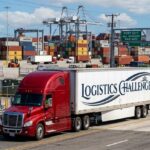
Unlike self-driving cars, trucks spend a lot of time heading straight on desolate highways which makes the trucking industry a perfect target for autonomous driving.
Trucking is a $700 billion industry that touches every aspect of the economy, and logistics companies will upgrade their fleets the moment it makes financial sense. How soon, is the question.
“We are trying to get self-driving technology out on the road as fast as possible,” said Alex Rodrigues, Embark’s chief executive. “Trucking needs self-driving and self-driving needs trucking.”
Read more of the original article at The New York Times.