Mobility and Disaster Preparation Preconferences Revealed for I&E
This year NAFA is excited to host two preconference workshops that will be held on Monday, April 23rd, leading into the start of I&E.
International Fleet Academy: Mobility
Where are You? Advancing on the Mobility Continuum
NAFA’s International Fleet Academy (IFA) is more than a one-day experience! It’s the kickoff to year-round engagement that will build a global community of peers working together to achieve global fleet best practices.
Disaster Planning Workshop
Are you really ready? The Critical Role of Fleets Before, During and Post-Disaster
Harvey, Irma, Juan, floods, fires, and ice... It doesn’t matter where you are located, fleet professionals must plan and respond to disasters. Hear from Fleet Managers who planned for it, lived through it, and learned from it!
Visit NAFAinstitute.org to stay updated on the latest enhancements and details on I&E, and to register for this year's event in Anaheim, California, on April 24-27, 2018.

Traditional Hybrid or Plug-In Hybrid Car – What’s the difference?
A recent Harris poll found that 67 percent of car buyers don’t know the difference between a traditional hybrid and a plug-in hybrid car.
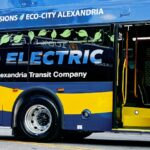
Simply stated, a hybrid car has both an internal combustion engine (ICE) and electric motor running on a battery, while a plug-in is much more similar to a fully electric car.
These electric vehicles also differ in how their batteries are recharged. Traditional hybrids charge while the vehicle is running on engine power while storing and using kinetic energy created by both braking and “coasting.” A plug-in hybrid’s battery or batteries are charged by doing exactly what the name suggests – plugging it into the national grid.
Read the article at the New York Daily News.
Tesla Pick-Up Truck Part of Future Plan
Tesla CEO Elon Musk is moving forward on plans to bring a pickup truck to market – though he said it will have to wait until the launch of a new compact electric SUV to be called the Model Y.
The Tesla vehicle would likely be "slightly bigger" than Ford's bestselling F-150 pick-up to allow it to contain an unspecified "game-changing" feature.
But pickup buyers are also some of the most loyal in the U.S. and even after nearly two decades trying to crack the full-size market import brands Toyota and Nissan barely rank as asterisks on the sales charts.
Read more of the article at BBC News.
Life-Saving Auto-Braking Technology Will Soon Become Standard Equipment
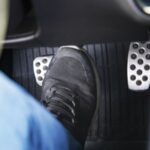
Automatic emergency braking has been shown to reduce the odds of a frontal crash, saving lives and preventing serious injuries and is rapidly becoming standard gear on cars sold in the U.S.
IIHS and NHTSA estimated the technology will prevent 28,000 crashes and 12,000 injuries annually by 2025 when AEB is expected to be standard on all new vehicles.
“IIHS is pleased to see that automakers are steadily moving toward the shared goal of putting standard AEB into every new car they sell,” said David Zuby, executive vice president and chief research officer of the Insurance Institute for Highway Safety, which conducted the latest study with the National Highway Traffic Safety Administration. “This is a big win for safety on our nation’s roads, which will see fewer crashes and injuries because of this commitment.”
Read the article at The Detroit Bureau.
Your Robot-Induced Whiplash Treatment Will Be Covered
The Verge
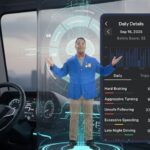
In these very early days of autonomous technology, Waymo, the self-driving unit of Google-parent Alphabet, understands the need to build trust among the public and announced it would be partnering with an insurance startup to cover riders in its soon-to-be-released driverless ride-hailing service.
Trov, a five-year-old insurance tech startup based in Danville, Calif., said it would work with Waymo to insure passengers for lost and damaged property and trip-related medical expenses.
The car insurance industry is scrambling to respond to autonomous technology, with experts predicting that uncertainty about liability could delay testing, deployment, and market penetration of these vehicles.
Read the article at The Verge.