Bridgestone Launches Summer Safety Campaign
Bridgestone Americas, Inc. announced the relaunch of TireSafety.com, a consumer website dedicated to providing drivers with important tire and driving safety information.
The website refresh is part of the company’s dedication to National Tire Safety Week (May 21 – May 28), an industry initiative led by the U.S. Tire Manufacturers Association (USTMA).
“Tires are an important vehicle safety feature – they are the only part of a car that touch the road and play a critical role in ensuring drivers can accelerate, stop and turn safely,” said Dave Johnson, chief quality officer, Bridgestone Americas. “Many drivers don’t realize that the safety and performance of their tires are highly dependent on proper care and maintenance. As the number one tire company in the world, we have an important role to play in educating drivers about how tires impact their safety and are committed to providing drivers with hands-on information to make tire maintenance simple.”

Supply Management and Fleet
In early May, I had the good fortune to attend ISM2018 in Nashville, where I got to learn a lot more about Procurement and Supply Management, and how they tie in with fleet. In this issue we feature the first of a few video interviews I conducted: with ISM’s Jim Fleming, talking about Certification in Supply Management, including how it often dovetails nicely with fleet management.
Getting to Zero Emissions Fleets
This week’s In the Public Interest column is penned by industry expert Clay Siegert, who has penned a thoughtful and detailed read on The Hybrid Road to Zero Emission Fleets. Give it a read.
Enjoy the issue and check in with FleetManagementWeekly.com for daily updates.
Ted Roberts
President
Self-Driving Car Technology Brings New Ideas to Old Problems
Autonomous vehicle startups and studies are proposing solutions to every day problems, from traffic jams to motion sickness.
Transportation Research found that a network of autonomous cars are able to slow more gently and not cause congestion, unlike a single driver's braking and the following vehicles doing the same.
"Driving helps mitigate motion sickness by making us engaged with the experience of movement. But passengers in an autonomous car will find it hard to anticipate movement and could feel queasy. Boston startup ClearMotion is working on shock absorbers that will counter the feeling of movement – thereby, it hopes, reducing the need for sick bags."
Read the article at The Guardian
NAFA Webinar: Leveraging your Fleet Telematics data for Insurance Savings
June 6, 2018 -- 12:00 - 1:00 pm EDT Register Today
Commercial fleet insurance costs continue to rise and present financial challenges to business owners and fleet managers. Insurers are keen on the ability to integrate telematics operational data into their underwriting, pricing, and claims processes for better efficiency and customer service.
Both fleet managers and insurance providers are looking for services that provide the ability to leverage your telematics data within the insurance process through your existing TSP services while keeping you in control.
Driver Assistance Technologies Affect How People Behave Behind the Wheel
As automakers add safety and convenience driver aids to their mainstream vehicles, many drivers will benefit from self-driving technology without ever experiencing an autonomous vehicle.
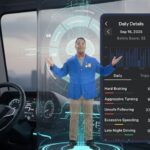
Nissan already offers a system that makes driving easier and safer so subtly that many car owners will never realize how much it’s helping them.
“It’s more relaxed driving,” John Maddox, president and CEO of the American Center for Mobility, the new test track for developing autonomous and driver-assistance systems in Willow Run, just west of Detroit. Maddox uses a CT6 with Super Cruise on his daily commute. “I’m less inclined to speed or weave in and out of traffic.”
Read the article at Detroit Free Press.