The Big Picture on BEVs: They May Not Shrink Your Fleet’s Carbon Footprint at All
By Andrew Boada, Editor at Large
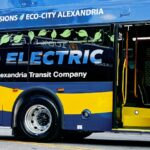
More and more fleets are getting on board the zero emissions bandwagon these days, and so are accepting TCOs that are higher than those for fossil-fuelled cars and trucks in order to acquire electric vehicles.
And while it’s true that at the tailpipe, hybrids (HEVs) and battery-electric vehicles (BEVs) emit fewer no greenhouse gas emissions, the bigger picture reveals another story.
The truth – which may be a surprise to some and appear to be heresy to others – is that when you consider the proverbial bottom line, both financially and environmentally, internal combustion vehicles (ICEVs) may be the way to go for fleets, at least for most locations and for the time being.

IIHS: GM Autobrake Systems Reduce and Prevent Front Crashes
Insurance Institute for Highway Safety (IIHS)
An IIHS study of General Motors vehicles with optional front crash prevention systems adds to the evidence that forward collision warning and automatic emergency braking prevent crashes.
"The evidence has been mounting that front crash prevention works, and it works even better when it doesn't solely rely on a response from the driver," says Jessica Cicchino, IIHS vice president for research and author of both studies.
Read the article at Insurance Institute for Highway Safety.
Ford Plans a Self-Driving Ride-Share Service
Ford is expanding its horizons with plans to launch a self-driving ride-share service in 2021.
It's a direction that will ultimately clash with the likes of Uber, Lyft, and General Motors (GM), among others.
Ford has been testing a self-driving Fusion in Miami for nine months. The cars are expensive but “the cost per mile for transportation for a person or a business is going to be lower and will be profitable. for us,” Sherif Marakby, CEO of Ford Autonomous Vehicles.
Read the article at Fortune.
Peugeot Returns to U.S. to Help People Get Around, but Not With Its Cars
Peugeot’s parent, PSA Group plans to start with their new app, Free2Move, which offers users in Washington, D.C., the ability to book any kind of ride. The app includes services to rent cars, electric scooters and bicycles, as well as ride-sharing services — with no separate charges for parking, gas or insurance. Other United States markets are expected to follow.
“We believe that human beings are eager to protect their spontaneous freedom of movement,” chief executive of four years, Carlos Tavares said. “You need to have an available mobility tool that is going to fulfill this need for freedom to move anywhere, anytime, when you decide to do so.”
Read the article at The New York Times.
Seeing the Benefits of Motor Pool
Having a motor pool offers enormous cost savings - and other benefits. But getting into an advantageous motor pool situation often requires overcoming some challenges, and a great place to start is speaking with other fleets who have been through the process themselves.