Autonomous Winnebago Meets Sharper Image Meets Ikea
The idea of an autonomous vehicle being just a car doesn’t fit Aprilli Design Studio founder Steve Lee’s sensibility, especially if you’re going to be in it for any length of time.
His lengthy experience in hotel architecture and design, along with a fascination with technology resulted in the creation of the Autonomous Travel Suite (ATS).
The ATS is essentially a self-driving hotel suite, complete with a sleeping area, bathroom, work space and small kitchen. All of that would be encased in a clear exterior that could be dimmed for privacy. The ATS received the Radical Innovation Award 2018.
Read the article at The Detroit Bureau.

New Criminal Charge to be Filed Against Carlos Ghosn by Japanese Authorities
Japanese authorities are building a new criminal case against former Nissan Motor chairman Carlos Ghosn for under-reporting his income by $26.6 million between 2015 and 2018.
Ghosn is already under arrest and investigation for conspiracy to understate his income by about 5 billion yen (US $44.3 million) from 2011 to 2014.
Financial crimes in Japan are punishable by up to 10 years in prison, an $89,000 fine, or both. False income reports are in a more serious category of crime than, for example, insider trading.
Read the article at Fortune.
Making Kindness a Core Tenet of Your Company
Just as bad behavior tends to spread, so too does good behavior. Kindness, it turns out, is contagious.
Research by Stanford psychologist Jamil Zaki, documents what he calls “positive conformity.” “Participants who believed others were more generous became more generous themselves.” This suggests that “kindness is contagious, and that it can cascade across people, taking on new forms along the way.”
The way to unleash kindness in your organization is to treat it like a contagion, and to create the conditions under which everybody catches it.
Read the article at Harvard Business Review.
Getting Behind The Wheel With Less Than 6 Hours Of Sleep Dramatically Increases Chances of Accidents
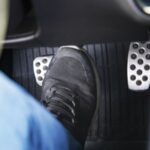
Results from a recent US DOT study showed that compared to drivers getting seven to nine hours of sleep a night, those who reported getting six hours of sleep had 1.3 times the odds of causing a crash.
Drivers who reported getting fewer than four hours had a startling 15.1 times the odds of causing a crash, which is comparable to the risk of a driver with a blood alcohol level 1.5 times the legal limit (that's about nine drinks for an average-sized person).
Read the article at Forbes.
NETS 2018 Conference Impression: More Fleets Are Taking the Zero Crash Goal Seriously
By Mark Boada, Executive Editor
Maybe it’s all the ballyhoo about how autonomous vehicles will make our roads crash-free, or maybe senior management at organizations that have a fleet are beginning to understand the true cost of crashes and expect fleet managers to prevent them.
Whatever the reason, the fleet industry at large is starting to take a zero traffic crash rate as a legitimate goal to talk about.