A Prioritized List of Electrification Opportunities for Your Fleet
A fleet planning tool called EValuate can provide a prioritized list of Electrification Opportunities for your fleet.

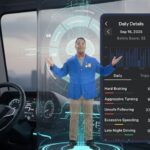
Quiz: Do You Have a 360-Degree View of Driver Risks?
As a fleet operator, it is your job to ensure company drivers remain informed about new and common hazards faced on the roadways and provide those employees an opportunity to learn and practice corresponding safety measures to keep themselves protected.
Due to the ever-changing driving landscape, the unpredictable nature of other ‘untrained’ drivers with whom your drivers share the road, and heavier traffic patterns, the risk of a crash is higher than ever before. For example, more than 70 percent of individuals consider themselves to be an above average driver. This statistic is concerning considering most drivers haven’t participated in a proper safety training course since receiving their license.
While each fleet has its own unique set of challenges, understanding the risks drivers face on a daily basis is one of the most critical objectives for fleet and safety professionals. By obtaining this information and combining it with a company’s own risk-data, MVRs and telematics reports, fleet operators will have the insight needed to develop and implement appropriate safety plans, adjust communications accordingly and adopt effective training programs that address current safety concerns and result in reduced incident rates.
Are you ready to test yourself and how much you know? See how in-tune you are with the issues and challenges your drivers face every day and the advanced performance techniques used to handle and avoid risky situations.
GM Speeding Up Plans for Battery-Powered Cars and Wind and Solar-Powered Plants
The auto industry is undergoing the most “significant transition” it has seen in a century, and General Motors doesn’t intend to be left behind, aggressively expanding its approach to clean technologies for vehicles and its factories.
The big truck plant in Arlington, Texas is already using 100% wind-generated power and GM recently signed up with the TVA to deliver 100 megawatts of solar energy by 2023. GM is also pushing ahead on construction of a new battery plant in Ohio that is part of its partnership with Korea’s LG Chem.
GM was an early proponent of hydrogen fuel-cell technology and two years ago launched a joint venture with Honda. The Japanese automaker is focusing on automotive applications for fuel cells. GM, on the other hand, is emphasizing stationary applications, such as back-up power for cellphone towers.
Read the article at The Detroit Bureau.
Is It Time to Revise Your Fleet Lifecycle Management Policy?
There have been unprecedented changes in the way fleets do business in the wake of the pandemic, and that might mean it’s time to look at revising your Fleet Lifecycle Management Policy.
UK: Fleet Procurement in the ‘New Normal’ to Be More Challenging
Fleet procurement in the ‘new normal’ business world will become more complex but will provide businesses with the opportunity to future-proof their fleets, rethink their supply strategies and increase flexibility and resilience in their supply chains.
That’s the view from Sue Branston, Country Head of Fleet Logistics UK, the UK and Ireland arm of Fleet Logistics International.
As the lockdown restrictions continue to be lifted and the UK Government attempts to kick-start the economy, businesses face a number of questions and challenges over the future composition of their fleets to make sure they are running at optimum efficiency.