Fuel Delivery: Booster Raises $56 Million in Series C Funding
Investment comes as the company completes over two million fuel deliveries more sustainably and safely than traditional supply chains. Adds new corporate partners. Expands service to fleets.
“Our customers and their employees have been asking us to expand into new markets for quite some time,” said Frank Mycroft, Booster CEO. “This funding and the caliber of those behind it gives us the ability to do so, and build the on-demand mobile fueling category we created. We will continue to revolutionize the way consumers and fleets get their fuel.”
Continuous MVR Monitoring: Overcoming the ‘Good Enough’ Objection
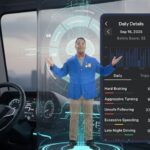
According to conventional wisdom, pulling a driver’s motor vehicle record (MVR) once a year is enough to identify risky drivers.
Among the most common objections to implementing a continuous motor vehicle record (MVR) program is that a once-a-year MVR pull is “good enough” to identify risky drivers.
This objection, which reflects conventional wisdom about MVRs, is true enough for most drivers. However, even the best driver can engage in risky behavior resulting in a violation — raising the fleet’s risk profile, the potential for a serious crash, and a liability lawsuit.
Envisioning a Fully Mobile & Connected Future at TechCrunch Sessions: Mobility
Brendan P. Keegan, CEO of the nation’s 8th largest fleet management company to discuss connecting and distributing new mobility technologies in the B2B landscape at leading tech event on July 10th
Merchants Fleet CEO Brendan P. Keegan will discuss the trend toward an increasingly mobile future and how FleetTech partners like Merchants are equipped to manage and connect this diverse system for their enterprise clients at TechCrunch Sessions: Mobility on July 10 in San Jose, California. The day-long event, which is centered on challenging assumptions and helping attendees understand the mobility revolution, features programming from industry-leading founders, investors, and technologists and is often considered one of the biggest technology events of the year
Keegan’s session, titled “If You Build It, Will They Buy? – The Role of the FleetTech Partner in the Future Mobility Ecosystem” will explore who will manage and connect the variety of new technologies, services, and connectivity in the mobility space for businesses and agencies.
“We’re at an exciting point in the mobility revolution, where organizations have more ways than ever to increase efficiencies and flexibility in transportation and service,” said Keegan. “This variety is only going to continue increasing, and businesses must be able to manage, connect, and best leverage the wealth of technologies and services at their disposal to ensure future success.”
How Self-Driving Cars Will Handle Parking
Robocars are very close to being able to drive the roads safely, but what about dropping you off, picking you up, and parking or waiting?
Human-driven mapping cars with sensors along with aerial photos will capture the data.
Mapping companies working on detailed maps of the road will include the locations of parking spaces and standing spaces on the public roads. Standing spaces can include the entrances to driveways and spaces in front of fire hydrants, suitable for pick-up an drop-off.
Read the article at Forbes.
Driver in Fatal Accident Should Have Had License Revoked
Volodymyr Zhukovskyy, a commercial truck driver, should not have had his license.
He was driving a Dodge pickup towing a flatbed trailer when the truck collided with a group of motorcyclists, killing 7 and injuring 3 others.
The Massachusetts Registry of Motor Vehicles had received information from Connecticut’s motor-vehicle agency about a May 11 drunken driving incident that should have prompted the removal of Zhukovskyy’s driver’s license. The head of Massachusetts’s motor-vehicle agency has now stepped down.
Read the article at The Washington Post.