Crashes Caused by Distracted Driving Tend to be More Severe Than Others
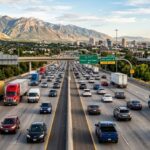
Researchers at the Risk Institute at Ohio State University found that distracted driving raises the odds that a crash will cause severe injury or death, compared with other crashes, particularly if those distraction-related crashes involve rear-end collisions or occur in work zones or on interstate highways.
The risk and severity of distraction-related crashes seem to diminish with roundabouts - perhaps because those roadway configurations force drivers to pay attention. The analysis found that in-vehicle distractions accounted for 48 percent of the crashes.
Read the article at The Washington Post.

Trump Says General Motors Should Pay Back Bankruptcy Aid
After General Motors announced the closing of five North American assembly and powertrain plants, Trump said GM should pay back the billions it cost taxpayers to rescue the company out of bankruptcy "if GM doesn't want to keep their jobs in the United States."
On Tuesday, he said he might yank all electric-car subsidies, including the $7500 federal tax credit which goes to consumers, not to General Motors and said he is "very disappointed" with GM CEO Mary Barra. The company also announced plans to fire 15 percent of its salaried employees across the world, which could see thousands more jobless in the United States.
Read the article at MSN.
Trump Tariffs On European and Asian Cars Will Significantly Cost US Jobs
The Trump administration has turned a deaf ear to arguments from the auto industry regarding the taxing of every automobile coming into the U.S. from any country other than Canada and Mexico. Higher auto tariffs will harm American families and workers, costing tens of thousands of jobs.
The European Union has made enormous investments in stateside plants building most of the vehicles sold in the U.S. in those plants. Mercedes builds vehicles in Alabama. BMW's biggest plant in the world is in South Carolina. Volkswagen has a plant in Tennessee with growing volumes of vehicles built there. Asian companies also have enormous manufacturing footprints in the U.S.
Read the article at Forbes.
How New NAFTA Deal Will Affect Automakers
The new deal known as the United States-Mexico-Canada Agreement — or USMCA — calls for increasing from 62.5 percent to 75 percent the percentage of a car's parts that have to come from one of the three countries to qualify for duty-free treatment. It also requires that 40-45 percent of an auto's content be made by workers earning at least $16 per hour. Vehicles not meeting the requirements would be subject to a 2.5 percent duty.
In a statement Friday, United Auto Workers President Gary Jones argued the new deal "is not strong enough ... to deter them from moving products and taking advantage of low cost labor. Unfortunately, as GM’s idling of plants in Ohio, Michigan and Maryland this week showed — the 'New' NAFTA, as it stands now, is not strong enough to protect American workers."
Read the article at The Detroit News.
This 75-year Harvard Study Found the 1 Secret to Leading a Fulfilling Life
For over 75 years, Harvard’s Grant and Glueck study has tracked the physical and emotional well-being of two populations: 456 poor men growing up in Boston from 1939 to 2014 (the Grant Study), and 268 male graduates from Harvard’s classes of 1939-1944 (the Glueck study).
Due to the length of the research period, this has required multiple generations of researchers.
The conclusion? According to Robert Waldinger, director of the Harvard Study of Adult Development, one thing surpasses all the rest in terms of importance: “The clearest message that we get from this 75-year study is this: Good relationships keep us happier and healthier. Period.”
Read the article at Fast Company.