Truemag

  • Newsletters
  • Thought Leadership
  • Mobility
  • Safety
  • Work Trucks
  • Videos
  • Home
  • Subscribe
  • Contact Us
  • Media Kit
  • Who We Are

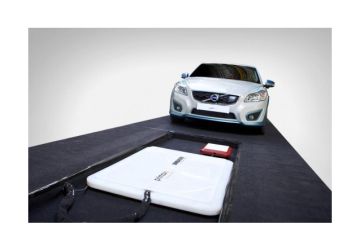
Wireless Charging: EV Power Via Slot-Car Technology

Wards Auto

As the drive to encourage electric-vehicle ownership gathers momentum, so does the desire to install automated recharging systems such as devices built into roads that top up batteries as the EVs drive over them.

Dynamic inductive charging technology has been tested in a range of scenarios globally. One system now is operating on a live transport route, on roads in two towns in South Korea.

High installation costs coupled with the relatively slow uptake of EVs are the main factors hindering wider installation of this technology, despite proof of its practicality and functionality.

But industry experts believe technological development in the field is so fast-moving that in-motion charging will be commonplace within the next five to 10 years.

Indeed, California-based Lucid Motors recently unveiled its luxury-level Air EV, fitted with inductive charging that enables battery range of up to 400 miles (240 km). Another California firm, Faraday Future, has launched the FF91, an electric SUV with a 378-mile (609-miles) range that is compatible with wireless charging stations.

Burak Ozpineci, group leader of the power-electronics and electric-machinery group of the National Transportation Research Center at the U.S. government’s Oak Ridge National Laboratory, is confident in the future of wireless charging. “In a few years, drivers of traditional (gasoline powered) cars will be viewed by society in the same way as smokers,” he says.

Utility companies will drive wireless charging, says Mashrur Chowdhury, a professor of transportation at the International Center for Automotive Research at Clemson University in. “It will all depend on how many electric vehicles we see. If we see gas prices going up and governments interested in investing more in alternative energy, (then) that will motivate the deployment” of wireless charging.

“Within five years I think we will see it in place in many areas,” he says. “When people see these roads in cities it will prompt more people to buy electric cars. It’s a 2-way street.”

Batteries will need to be cheaper and more effective to achieve this. Batteries, which currently account for up to 50% of the price of an EV, have proved cost-prohibitive for many drivers wishing to switch from traditional vehicles. Most existing EV batteries provide limited driving distance between charges and are a major source of the weight auto engineers are trying to reduce.

The electromagnetic technology involved in dynamic inductive charging is the same principle as the Qi wireless charging system that powers a smartphone. This could remove storage requirements for the battery, reducing both its weight and cost.

South Korea switched on its first wireless road in 2013 for its online electric vehicle (OLEV) bus service and has been expanding its coverage ever since.

Read more of the original article at Wards Auto.

 

Feb 20, 2017connieshedron
What the Institute for Supply Management Has to Offer Fleet ProfessionalsUpdating Your Safety Culture in the Age of 'Big Data'
Recent Posts
  • IMPROVLearning: How Comedy, Behavioral Science and AI Improve Fleet Safety
  • Improving Productivity with AI: Turning Fleet Data into Faster Decisions
  • National Safety Council Projects Increased Traffic Crash Risk during Fourth of July Weekend
  • Keep Every Heavy-Duty Maintenance Inspection on Track — Free Fullbay Checklist
  • Gain Data-Driven Insights into Commercial Vehicle Market Trends at Executive Leadership Summit
  • Last Chance to Save: Register for NAFA’s Maintenance Workshop
  • License Plate Cameras Are About to Start Tracking a Lot More Than Just Your Car
  • America’s Heavy EV Problem May End with Drivers Paying More
  • Trends in U.S. Drivers’ Perceptions and Attitudes Toward Vehicle Automation, 2019–2025
  • 2026 NETS Strength IN Numbers Conference: Early Bird Rates!
ASSOCIATION NEWS
Last Chance to Save: Register for NAFA’s Maintenance Workshop
How AFLA Is Positioning Itself for the Future of Fleet Mobility
‘Raise Your Hand and Get Involved’
NAFA Names 2026 Class of Fellows, Honoring Leaders in Fleet Management
Award Winners Honored at NAFA I&E
2026 NAFA I&E Seeks to Change Perceptions, Invigorate Fleets
NAFA Announces Lineup for Media Day at I&E 2026: Industry Leaders to Showcase the Latest Innovations
TECHNOLOGY
Improving Productivity with AI: Turning Fleet Data into Faster Decisions
Fleet Operations Are Changing – The Industry Needs to Evolve With Them
AI-Powered Vehicle Inspections Move Beyond the Checklist
Motive’s New Workforce Capabilities Aim to Improve Performance, Automate Rewards
AI + Human Insight: Why Fleet Leaders Need Both to Win in 2026
NTSB Finds Automation Overreliance Contributed to Two Fatal Ford BlueCruise Crashes
New AI Assistants Automate Fleet Data Analysis, Decision Making and More
CONFERENCES & WEBINARS
2026 NETS Strength IN Numbers Conference: Early Bird Rates!
AFLA 2026 – Keynotes Announced!
Private Fleets Flex at National Private Truck Council Conference
Free NAFA Webinar: Manage Your Fuel Cost Volatility
Registration Now Open for NETS Annual Conference
Early Bird Pricing for AFLA 2026 – Ending June 1
NAFA Online Seminar: Essentials of Fleet Management
INDUSTRY ANNOUNCEMENTS
Union Leasing Becomes Moventum Fleet Management as 70-Year Company Accelerates into Next Phase
Fleetio Wins Innovations Award at NAFA’s 2026 Institute & Expo
WIFM is heading to NAFA!
Cox Automotive Unveils Cox Fleet, Setting a New Standard for Fleet Uptime Nationwide
AFLA Canadian Fleet Professional of the Year Award: Nominations Open!
NAFA Webinar: Kickoff the 2026 100 Best Fleets Contest on December 4!
Join NAFA’s Free Fleet 101 Live Course

Fleet Management Weekly Newsletter Archive
Access to back issues of the FMW newsletter.

FMW Mobility
How mobility is rapidly changing the fleet management landscape.

Newsletter

Subscribe

FMW Fleet Videos
Video clips of industry leaders speaking on a variety of engaging hot topics in fleet.

2014-2020 © Fleet Management Weekly