Innovation and Disruption All Around
Whether you are considering creating or enhancing a telematics program for a North American fleet or a global fleet, or just wonder how it’s done, we have a terrific article for you. Bob Zimmer, PepsiCo’s senior manager of supply chain fleet technology, gives us a roadmap in How PepsiCo is Creating a Global Telematics Program.
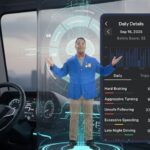
More on telematics, now safety, in a Q&A with Ed Dubens, CEO and founder of eDriving. The company is introducing its Mentor TSP program in January and Ed gives us a peek into its powerful capabilities.
Ted Roberts is back from a week-long trip to Germany, where he met with a number of innovative companies in the automotive sector. We learn more in his first video clip: German OEMs and Startups are Getting Ready for Massive Disruption.
Drive Safety,
Janice Sutton
Editor in Chief

When Will EVs Outnumber Gas-Powered Cars?
Electric vehicles (EVs) have been around about as long as cars themselves.
Analysts expect sales of passenger EVs to overtake conventional internal combustion-based vehicles by 2038 (with EV sales topping 50 million a year as compared to conventional vehicle sales of 47 million by then).
With about 15 percent of U.S. greenhouse gas emissions emanating from the tailpipes of our internal combustion cars and light trucks, and gasoline becoming more and more expensive, the inevitable switchover to EVs—despite efforts by the Trump administration to reduce national fuel efficiency standards and bolster the ailing oil industry—is going to be a win-win for consumers and the planet. 2038 can’t come too soon!
Read the article at The Environmental Magazine.
GM Sides with Trump in Emissions Fight, Splitting the Industry
Breaking with some of their biggest rivals, General Motors, Fiat Chrysler and Toyota said Monday they were intervening on the side of the Trump administration in an escalating battle with California over fuel economy standards for automobiles.
Their decision pits them and others against their peers, including Honda and Ford, who this year reached a deal to follow California’s stricter rules.
Nearly two dozen other states have filed suit against the Trump administration, alongside California, over the emissions rules. California and the other states maintain that its authority to set standards on tailpipe pollution was granted lawfully by Congress as part of the Clean Air Act, one of the country’s foundational environmental laws, and that its revocation would be unlawful.
Read the article at The New York Times.
Vehicle Deaths Estimated at 40,000 for Third Straight Year
For the first time since the Great Recession, the U.S. has experienced three straight years of at least 40,000 roadway deaths, according to preliminary estimates released Feb. 13 by the National Safety Council.
Florida, Hawaii, Minnesota, Nevada, New Hampshire, Oregon, Pennsylvania and Washington, D.C., had at least a 5.8% spike in fatalities, according to Council estimates. Five states experienced declines of more than 9.4%: Kansas, Maine, New Jersey, Rhode Island and Wyoming.
To help ensure safer roads, NSC urges motorists to: Practice defensive driving; Recognize the dangers of drugged driving, including impairment from prescription opioids; Stay engaged in teens’ driving habits; Learn how to use your vehicle’s safety systems; Fix recalls immediately, and ask lawmakers and state leaders to protect travelers on state roadways.
Read the article at The National Safety Council.
Congress Mulls Vehicle Miles Traveled Tax
CBO Report: A 7.5 cents per mile traveled tax on commercial trucks would cover their share of the U.S. Highway Trust Fund shortage
By Patrick O’Connor, NAFA U.S. Legislative Counsel
Imposing a 7.5-cent tax for every mile a commercial truck travels would generate enough new revenue to replace the Highway Trust Fund taxes that truck owners now pay and also cover the industry’s share of the fund’s current shortfall, a Congressional Budget Office report found last week.
With the current surface transportation authorization set to expire at the end of September 2020, lawmakers are debating how to pay for funding gaps in the Highway Trust Fund.