ARI Certified as a Women’s Business Enterprise
ARI announced the company has received national certification as a Women’s Business Enterprise (WBE) by the Women’s Business Enterprise National Council (WBENC).
ARI is the first and only full-service, global fleet management provider to be certified as a Women’s Business Enterprise by WBENC. ARI is a subsidiary of Holman Enterprises, which was also certified as a Women’s Business Enterprise earlier this year.
Following in the footsteps of her grandfather Steward C. Holman and father Joseph, who currently serves as Holman Enterprises’ Chairman Emeritus, Mindy Holman joined the family-owned organization in 1986. Today, Mindy leads Holman Enterprises as Chairman of the Board.
Read more from ARI.

The Battle Over Auto Emissions Is Heating Up
The White House, the state of California, the auto industry, and consumer groups are all engaged in a policy struggle over how fuel-efficient cars and trucks should bein the coming years.
The battle, which has intensified in recent weeks, pits the Trump administration, which wants to reduce fuel-efficiency standards to make cars less expensive, against California, which wants to continue setting its own far stricter rules, saying it will ease pollution and save consumers money on fuel.
Consumer groups including Consumer Reports are siding with California, while the auto industry is split between Trump and California.
Read the article at MSN.
Mentor TSP: Enhancing Your Existing Telematics Solution to Boost Your Company Safety Culture
Q&A with Ed Dubens, CEO/Founder of eDriving
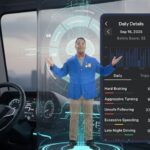
In advance of eDriving’s release of Mentor TSP (Telematics Service Provider), CEO and Founder Ed Dubens explains how eDriving’s latest solution provides fleet managers/operators with the option of adding Mentor’s risk management suite to their existing telematics solutions to reduce collisions, injuries, license violations, and total cost of fleet ownership.
What safety data is typically collected by telematics devices?
Hard-wired and OBDII telematics solutions can collect a wide range of fleet efficiency and productivity information that is incredibly useful and profitable for Fleet Operators. However, the safety metrics are typically limited to an understanding of the harsh acceleration, braking, cornering and speeding information associated with the “vehicle”. Such data may or may not be able to be linked to a specific driver at any point in time.
Does this kind of data address ALL the fleet operators’ safety and risk management concerns and create opportunities for improvement?
GM Releases Perfect 200-Plus Mile Range Crossover EV for US Market … in China
GM announced two weeks ago that it would be supporting Donald Trump’s rollback of EV emissions standards by siding with the administration versus California.
You would think that GM — with its pioneering Bolt EV and “zero emissions future” initiatives — would support lowering emissions. But something has gone terribly wrong at GM over the past few years in EVs.
The latest indication of this is an announcement that the company would be releasing a Menlo crossover EV — which would likely do well in a US market — in China alone. It feels like the “Who killed the Electric Car” saga all over again.
Read the article at electrek.
Shared Mobility Has Two Major Obstacles To Overcome
A lack of trust in safety technology, including lane-keep, emergency braking and advanced adaptive cruise control systems, and an emotional ‘attachment’ to car ownership are two key road blocks to a future of vehicle sharing and self-driving cars.
It could be at least 10 years before autonomous vehicles, and the sharing of them, will become an integral part of society.
Lukas Neckermann, Managing Director of Neckermann Strategic Advisors and co-author of the study adds, “Consumers need to be inspired by the benefits of AVs instead of being overwhelmed by the technology. The promise of enhanced journey safety, convenience and dependability is much more compelling than endless discussions on the number of hands-off miles driven in autonomous mode.”
Read the article at Forbes.