The Logistics of Keeping Fleets in the Fast Lane
Becca Rabinowitz, Director of Strategic Business Lines at SpotHero
For decades, personal cars have been mobility’s bread and butter.
But with the rise of attractive alternatives to personal vehicles, car ownership is no longer a necessity for people living in urban areas. And with a new generation fully accustomed to finding services through their smartphones, dozens of shared car providers are looking to fill the new desire for cars-on-demand.
But when you consider how much work goes into maintaining just one car, it makes you wonder how car share fleets are managing the logistics of car ownership—the responsibilities consumers have been quick, and thankful, to relinquish.
Companies like ReachNow, Canvas, and LimePod have felt the weight of these challenges in recent months, making now an important moment to think critically about how fleets can continue to support this growing demand. Before assuming responsibility over thousands of cars at once, fleets will need to master the three core logistical challenges of managing shared cars at scale: storage, payments, and servicing.
TRUCE Software Expands its Award-Winning Platform with Introduction of Real Time Utilization Dashboard
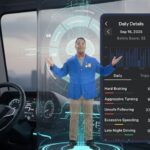
TRUCE Software announced the release of its Employee Utilization Dashboard. A significant expansion of its Management Console tools, the Utilization Dashboard is designed to give customers increased visibility and insights into the use of the TRUCE application across their workforce with tools to identify risks in mobile device policy compliance.
TRUCE’s patented technology offers employers the ability to manage employee access to mobile apps in designated work zones and company vehicles using contextual indicators and location-specific beacons. As a result, employees work smarter and safer in designated zones, where an individual’s mobile device is in use – behind a desk, in a meeting room, driving a vehicle, working at a jobsite, etc.
The Utilization Dashboard ensures the TRUCE app is installed and operating effectively on employee devices, while improving policy compliance by identifying individuals – on an employee-by-employee and device-by-device basis – who may not be using the system properly.
Read more of Press Release.
Best Practices and Proven Strategies
FMW is delighted to launch a new column in this week’s issue. The first in a series written by Randy Read, president of EnVue, is The Continuing Evolution of Telematics Technology. Randy will not promote particular products in the series but share best practices and proven strategies he has gathered from working with a variety of businesses.
Many of us experience the effects of the twice-yearly one-hour time change on our internal clocks. Art Liggio focuses on the serious risks to both drivers and pedestrians in Don’t Let an Extra Hour Throw You Off Course – Tips for Navigating the Time Change.
If you manage a federal fleet, don’t miss Adlore Chaudier’s piece: Confusing Changes to Two Key Federal Fleet Fuel Performance Metrics.
Speaking of the Feds, California raises the stakes in its tussle with the Trump administration over the state’s clean car rules.
Enjoy the issue and drive safety!
Janice Sutton
Editor in Chief
Successful Meeting of the fleetcompetence Group in Estoril
As part of the Fleet Europe Summit 2019 in Estoril, Portugal, the fleetcompetence Group held a meeting on November 6 and 7 with the international team and the cooperation partners from various European countries. Previously, the team met in Stockholm in April 2019.
Over the course of two days, many current projects were discussed, and important decisions were made in order to be even more successful together in the future. Once again, it was impressive to see the exceptionally competent people who are part of this group. Both the members of the international team and the cooperation partners in the individual countries are very experienced, motivated, innovative, cooperative, and analytical.
Thanks to this dedicated team who possess sound specialized knowledge, the fleetcompetence Group is in a position to offer national and international corporate customers even greater added value in fleet and mobility issues in the future.
The next meeting of the fleetcompetence Group is expected to take place in April 2020 in Milan.
Electric Cars Are Changing the Cost of Driving
Few have driven a Tesla to the point at which the vehicle really starts to show its age. But Tesloop, a shuttle service in Southern California comprised solely of Teslas, was ticking the odometers of its cars well past 300,000 miles with no signs of slowing.
Most commercial vehicle fleets still run on gasoline and diesel, David Hayward, a fleet expert with Deloitte consulting, said. But EVs are top of mind. “Everyone is excited about it and everyone wants it,” he told Quartz. “But there’s trepidation.” The potential savings are huge. Fleet owners’ biggest expenses after depreciation (44%) are fuel (22%) and maintenance and repairs (11%), according to Deloitte. EVs could slash those by more than half.
Unknowns have kept fleet owners on the sidelines. Range and charging infrastructure remain major concerns for fleet owners who must ensure recharging isn’t more difficult than refilling at a gas station for salespeople and corporate clients on far-flung trips (most drivers charge at home or work).
Read the article at Quartz.