Driving Monitoring Systems Draw Consumer Skepticism
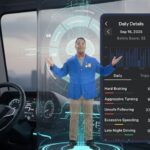
A new study from Autolist.com shows that consumers’ attitudes towards driver monitoring system, or DMS, which can prevent a driver from nodding off while behind the wheel, are mixed.
The survey found that consumers were skeptical of the impact a DMS has on driver behavior.
“We’re still in the early days of Driver Monitoring Systems so many consumers aren’t thinking of them as something they’re interacting with frequently yet,” said Chase Disher, analyst at Autolist. “Instead, they view a DMS as something that will impact them when others are using it around them.”
Read the article at The Detroit Bureau.

Ramping Up Your Fleet Marketing?
Are you ramping up your fleet marketing efforts for this fall? Or planning for 2020?
If yes, Fleet Management Weekly (FMW) can help with those goals -- delivering an audience of 18,000+ that's comprised of nothing but professionals who are focused on fleet.
FMW offers a variety of Content Sponsorship and Advertising packages (and à la carte options) that deliver proven results -- true ROI -- in a cost-effective manner.
CLICK to learn more about how you can effectively reach FMW’s audience of 18,000+ fleet professionals.
AAA Study Evaluates Vehicle Emergency Escape Tools
Vehicle escape tools are intended to aid occupants in exiting their vehicle in an emergency by breaking through side windows and cutting through locked seat belts.
This study by AAA evaluates the performance of common consumer-grade vehicle escape tools to inform drivers about how, when and why they should be used. In addition, it examines the use of laminated glass for automotive side windows and how it could impact an occupant’s ability to escape during an emergency.
Read the article at AAA NewsRoom.
The Arrival of Autonomous Vehicles Has Been Overestimated
Several carmakers and technology companies have concluded that making autonomous vehicles is going to be harder, slower and costlier than they thought.
About 80% of the technology needed to put self-driving cars into routine use has been developed, but the remaining 20%, including developing software that can reliably anticipate what other drivers, pedestrians and cyclists are going to do, will be much more difficult.
The technology is available now to create a car that will not hit anything. But such a car would constantly slam on the brakes.
“You see all kinds of crazy things on the road, and it turns out they’re not all that infrequent; you have to be able to handle all of them,” Argo Chief Executive Bryan Salesky said. “With radar and high-resolution cameras and all the computing power we have, we can detect and identify the objects on a street. The hard part is anticipating what they’re going to do next.”
Read the article at SFGate.
How Dangerous is Stoned Driving?
Nobody recommends driving while high.
Alcohol makes drivers more aggressive and accident-prone, while drivers who are high are more likely to drive too slowly. Studies by NHTSA suggest this is broadly correct.
While it’s generally illegal to drive while high, it’s not clear if stoned driving is a serious problem.
Read the article at The Guardian.