Best and Worst States For Vehicle Accident Claims
A new study by Insurance.com ranks the best and worst states for car accident claims, based on the average rates drivers pay following an at-fault accident.
Michigan is the worst state for accident claims, with premiums jumping an average of $3,502 after an at-fault accident, a 48 percent increase over pre-accident rates.
Maine is the most forgiving state where drivers pay an average of $1,058 after an accident. This is a mere 20 percent increase over the average insurance rate of $884, which is also the lowest in the nation.
Read the article at MSN.

Self-Driving Car Committee Scrubbed by Trump Administration Without Telling Members
The Obama-era federal committee on automation in transportation was quietly terminated earlier this year by the Trump administration, without informing some members.
The committee held its lone meeting on January 16th, 2017, four days before Trump’s inauguration. The DOT never called the committee to meet again.
Duke’s Mary “Missy” Cummings said it felt like the committee spent the last two years in a “no man’s land,” and views it as a lost opportunity. “Why aren’t we being used to look across the industry and make recommendations for safety? It would be an ideal application of this board,”
Read the article at The Verge.
Why Driver Managers are the Perfect Fit for the Role of Driver Coach
What interests the boss fascinates the worker
By Jim Noble, VP of Risk Engineering, eDriving
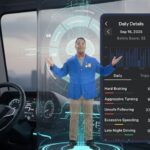
Road safety is moving in the wrong direction, and our unsafe driving habits are contributing to this. We know that about 94% of crashes are caused by incorrect driver behavior and attitudes – not skills – and, because of this, attempting to improve driver skills is not the solution.
Instead, it’s guiding drivers to safer attitudes and behaviors that will have a lasting impact on road safety, and one of the ways to encourage drivers to form good habits is through coaching.
How Much Traffic Do Uber and Lyft Cause?
In the 2010s, Uber and Lyft stormed into cities with a grand promise that app-based rides would reduce the need for personal car ownership and ultimately remove cars from the road.
Transportation consultancy Fehr & Peers, released a joint analysis showing that Uber and Lyft vehicles are responsible for significant portions of vehicle-miles traveled (VMT) in six major urban centers.
These numbers suggest that ride-hailing is hitting traffic harder in many cities than previously understood.
Read the article at CityLab.
Will America’s Love Affair With Cars End With Self-Driving Vehicles?
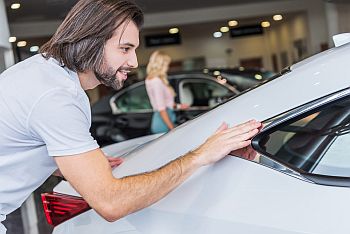
Most Americans love their cars and even pamper them.
We rely upon our beloved cars to get us to work and to get us to the beach or up into the mountains for hiking, and treasure them for the freedom and independence they can provide.
With the arrival of autonomous vehicles, some suggest that we all will eventually not care about which car we are in as they will be owned by large companies that deploy them in fleets.
Others say that we’ll still love our cars, relishing them for the freedoms they provide, and personalization will no longer be tied to a specific car, but instead become an emotional bond across whole fleets of driverless cars.
Read the article at Forbes.