Truemag

  • Newsletters
  • Thought Leadership
  • Mobility
  • Safety
  • Work Trucks
  • Videos
  • Home
  • Subscribe
  • Contact Us
  • Media Kit
  • Who We Are

Small Car Driver Risks on the Rise, Study Shows

The Detroit Bureau

Drivers of small cars have long known that they are at greater risk when involved in collisions with larger vehicles.

However, the risk is increasing, according to a new study.

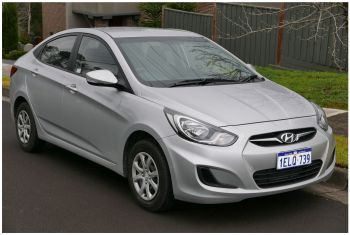
The Insurance Institute for Highway Safety report suggests that traffic fatality rates are on the rise overall, but noted that of the top 10 vehicles involved in fatal crashes, five are minicars and three are small cars. The vehicle at the top of the list if the Hyundai Accent.

Despite the increase in the overall rate, the worst vehicles actually saw some improvement. The 2014 Hyundai Accent’s death rate of 104 compares with 120 for the 2011 Accent. The worst vehicle among the 2011 models was the Kia Rio with a rate of 149. The 2014 Rio’s death rate is 102.

Both models were redesigned in 2012, and their lower death rates may reflect the better crash-test performance of the newer designs, IIHS noted.

The rest of the top five included the Scion tC 2-door car, which had 101 deaths; the Chevrolet Spark 4-door car; and the Nissan Versa.

At the other end of the spectrum, top five models with the lowest driver death rates – which was zero deaths – were the Volkswagen Tiguan 2WD SUV, Toyota Tacoma Double Cab long bed 4WD pickup, Mazda CX-9 2WD SUV, Audi A6 4WD and Audi Q7 4WD.

The overall rate of driver deaths for 2014 models was 30 per million registered vehicle years, which the group said was up from 28 for 2011 models, according to the study. While cars, trucks and utility vehicles continue to become safer vehicles, those advances are being offset.

“Vehicles continue to improve, performing better and better in crash tests,” said David Zuby, IIHS executive vice president and chief research officer, in a statement. “The latest driver death rates show there is a limit to how much these changes can accomplish without other kinds of efforts.”

The factor that innovation cannot overcome is the economy, in this case, the improving economy. Studies shows that as unemployment rates drop, traffic fatalities tend to rise because people are more mobile then whether is because they are travelling to work or for pleasure.

Recent statistics show that American’s are driving more miles than ever. Each of the last three years, U.S. drives have set a new record for miles travelled behind the wheel.

“Researchers found that the drop was driven largely by improved vehicle designs and safety technology,” the group said. “Such improvements have continued, but the new results show that, by themselves, they won’t be enough to eliminate traffic deaths.”

The IIHS study found that July and August are typically the deadliest months on U.S. roadways, with an average daily toll of 116, which the group attributed to driving patterns that increase in warmer summer months.

Road deaths have been trending downward since the early 1970s, with an especially large dip beginning in 2008. However, that changed in 2015, with deaths increasing 7% over the previous year. Preliminary data indicate the toll increased in 2016 as well.


May 29, 2017connieshedron
G.M. Accused in Lawsuit of Deceit on Diesel Truck EmissionsWheels Wins Silver Stevie® Award for Sales and Customer Service
Recent Posts
  • IMPROVLearning: How Comedy, Behavioral Science and AI Improve Fleet Safety
  • Improving Productivity with AI: Turning Fleet Data into Faster Decisions
  • National Safety Council Projects Increased Traffic Crash Risk during Fourth of July Weekend
  • Keep Every Heavy-Duty Maintenance Inspection on Track — Free Fullbay Checklist
  • Gain Data-Driven Insights into Commercial Vehicle Market Trends at Executive Leadership Summit
  • Last Chance to Save: Register for NAFA’s Maintenance Workshop
  • License Plate Cameras Are About to Start Tracking a Lot More Than Just Your Car
  • America’s Heavy EV Problem May End with Drivers Paying More
  • Trends in U.S. Drivers’ Perceptions and Attitudes Toward Vehicle Automation, 2019–2025
  • 2026 NETS Strength IN Numbers Conference: Early Bird Rates!
ASSOCIATION NEWS
Last Chance to Save: Register for NAFA’s Maintenance Workshop
How AFLA Is Positioning Itself for the Future of Fleet Mobility
‘Raise Your Hand and Get Involved’
NAFA Names 2026 Class of Fellows, Honoring Leaders in Fleet Management
Award Winners Honored at NAFA I&E
2026 NAFA I&E Seeks to Change Perceptions, Invigorate Fleets
NAFA Announces Lineup for Media Day at I&E 2026: Industry Leaders to Showcase the Latest Innovations
TECHNOLOGY
Improving Productivity with AI: Turning Fleet Data into Faster Decisions
Fleet Operations Are Changing – The Industry Needs to Evolve With Them
AI-Powered Vehicle Inspections Move Beyond the Checklist
Motive’s New Workforce Capabilities Aim to Improve Performance, Automate Rewards
AI + Human Insight: Why Fleet Leaders Need Both to Win in 2026
NTSB Finds Automation Overreliance Contributed to Two Fatal Ford BlueCruise Crashes
New AI Assistants Automate Fleet Data Analysis, Decision Making and More
CONFERENCES & WEBINARS
2026 NETS Strength IN Numbers Conference: Early Bird Rates!
AFLA 2026 – Keynotes Announced!
Private Fleets Flex at National Private Truck Council Conference
Free NAFA Webinar: Manage Your Fuel Cost Volatility
Registration Now Open for NETS Annual Conference
Early Bird Pricing for AFLA 2026 – Ending June 1
NAFA Online Seminar: Essentials of Fleet Management
INDUSTRY ANNOUNCEMENTS
Union Leasing Becomes Moventum Fleet Management as 70-Year Company Accelerates into Next Phase
Fleetio Wins Innovations Award at NAFA’s 2026 Institute & Expo
WIFM is heading to NAFA!
Cox Automotive Unveils Cox Fleet, Setting a New Standard for Fleet Uptime Nationwide
AFLA Canadian Fleet Professional of the Year Award: Nominations Open!
NAFA Webinar: Kickoff the 2026 100 Best Fleets Contest on December 4!
Join NAFA’s Free Fleet 101 Live Course

Fleet Management Weekly Newsletter Archive
Access to back issues of the FMW newsletter.

FMW Mobility
How mobility is rapidly changing the fleet management landscape.

Newsletter

Subscribe

FMW Fleet Videos
Video clips of industry leaders speaking on a variety of engaging hot topics in fleet.

2014-2020 © Fleet Management Weekly