The most recent people targeted for replacement by robots?
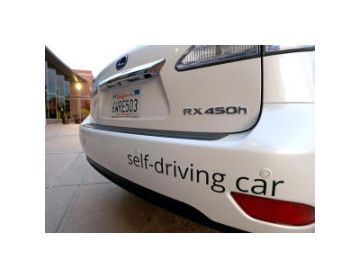
Car drivers—one of the most common occupations around the world. Automotive players face a self-driving-car disruption driven largely by the tech industry, and the associated buzz has many consumers expecting their next cars to be fully autonomous.
But a close examination of the technologies required to achieve advanced levels of autonomous driving suggests a significantly longer timeline; such vehicles are perhaps five to ten years away.
Mapping a technology revolution
The first attempts to create autonomous vehicles (AVs) concentrated on assisted-driving technologies (see sidebar, “What is an autonomous vehicle?,” for descriptions of SAE International’s levels of vehicle autonomy). These advanced driver-assistance systems (ADAS)—including emergency braking, backup cameras, adaptive cruise control, and self-parking systems—first appeared in luxury vehicles. Eventually, industry regulators began to mandate the inclusion of some of these features in every vehicle, accelerating their penetration into the mass market. By 2016, the proliferation of ADAS had generated a market worth roughly $15 billion.
Around the world, the number of ADAS systems (for instance, those for night vision and blind-spot vehicle detection) rose from 90 million units in 2014 to about 140 million in 2016—a 50 percent increase in just two years. Some ADAS features have greater uptake than others. The adoption rate of surround-view parking systems, for example, increased by more than 150 percent from 2014 to 2016, while the number of adaptive front-lighting systems rose by around 20 percent in the same time frame (Exhibit 1).
Both the customer’s willingness to pay and declining prices have contributed to the technology’s proliferation. A recent McKinsey survey finds that drivers, on average, would spend an extra $500 to $2,500 per vehicle for different ADAS features. Although at first they could be found only in luxury vehicles, many original-equipment manufacturers (OEMs) now offer them in cars in the $20,000 range. Many higher-end vehicles not only autonomously steer, accelerate, and brake in highway conditions but also act to avoid vehicle crashes and reduce the impact of imminent collisions. Some commercial passenger vehicles driving limited distances can even park themselves in extremely tight spots.
But while headway has been made, the industry hasn’t yet determined the optimum technology archetype for semiautonomous vehicles (for example, those at SAE level 3) and consequently remains in the test-and-refine mode. So far, three technology solutions have emerged:
♦ Camera over radar relies predominantly on camera systems, supplementing them with radar data.
♦ Radar over camera relies primarily on radar sensors, supplementing them with information from cameras.
♦ The hybrid approach combines light detection and ranging (lidar), radar, camera systems, and sensor-fusion algorithms to understand the environment at a more granular level.
The cost of these systems differs; the hybrid approach is the most expensive one. However, no clear winner is yet apparent. Each system has its advantages and disadvantages. The radar-over-camera approach, for example, can work well in highway settings, where the flow of traffic is relatively predictable and the granularity levels required to map the environment are less strict. The combined approach, on the other hand, works better in heavily populated urban areas, where accurate measurements and granularity can help vehicles navigate narrow streets and identify smaller objects of interest.
Read more of the original article at McKinsey & Company