|
|
 |
|
Fleets are collecting more data than ever, but many still struggle to turn that information into clear direction and effective planning.
Disconnected systems, inconsistent metrics, and limited visibility can slow planning and make it difficult to identify where improvements are needed most.
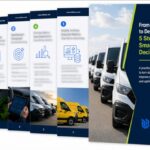
In the Free Utilimarc Guide ‘From Data Overload to Decisive Action’, you’ll learn five practical steps fleets can take to better connect data, improve visibility, and support more informed planning.
READ MORE
|
|
|
|
|
|
Fuel prices surged by nearly $2 per gallon in early 2026 — and structural refining constraints mean that kind of volatility isn’t going away. For fleet managers, fuel costs feel like something to absorb. This session reframes it as something to manage.
Driver behavior accounts for 15% to 40% of fuel consumption variance between identical vehicles. Inconsistent and aggressive driving behaviors can increase fuel costs, accelerate maintenance wear, drive insurance premiums, and increase incident exposure.
This session gives fleet leaders the data and the framework to act — and the language to make the case internally when every budget line is under scrutiny.
READ MORE
|
|
|
|
|
|
NETS 2026 Strength IN Numbers® Fleet Safety Benchmark Conference / September 15-17 / Hyatt Regency Indianapolis
Attendees will gain practical strategies, benchmarking insights, real-world case studies, and meaningful peer exchange with employers committed to advancing road safety.
We are excited to launch this year’s program with a strong agenda featuring industry leaders, innovative case studies, benchmarking insights, and practical discussions focused entirely on fleet safety. We look forward to seeing you in Indianapolis!
READ MORE
|
|
|
|
|
|
Motive, an AI platform for physical operations, announced a major expansion of its Workforce Management solution with the launch of Driver Rewards and enhancements to AI Coach and Performance Hub.
Unveiled at Vision 26, Motive’s annual innovation summit, Driver Rewards is designed to help organizations engage, incentivize, and retain drivers at scale.
New AI Coach capabilities extend AI-powered driver coaching beyond safety to fuel usage, compliance, and equipment health and newly introduced Coaching Score delivers the actionable intelligence to measure program effectiveness.
READ MORE
|
|
|
|
AI-Powered Vehicle Inspections
|
|
|
|

(image credit: Self Inspection)
By Ed Pierce, Contributing Editor, Fleet Management Weekly
One area drawing growing attention is AI-driven vehicle condition monitoring to document exterior damage, verify inspection quality, and evaluate tire condition.
Among the companies discussing this trend at NAFA I&E was Self Inspection, which presented a platform to standardize vehicle inspections.
The goal is not simply faster inspections but more consistent documentation and earlier detection of issues.
For fleet managers, the discussion highlights a broader industry challenge: how to maintain accurate, auditable vehicle condition data across increasingly decentralized operations.
READ MORE
|
|

By Tod Trousdell, Fleet Marketing Consultant and Partner at RobertsTrousdell Communications/Atlanta
I attended the annual National Private Trucking Council (NPTC) conference in Orlando, focused on private trucking.
This was three days of education, recognition, and the opportunity to experience products, services, and solutions from more than 150 exhibitors.
Every industry facet was on-hand, from big truck OEMs and traditional fleet service folks to new era providers of services like AI, software and quite frankly, everything between.
“We’ve worked really hard to build a space where top fleet leaders feel safe to exchange ideas and build a community…” – Gary Petty, President and CEO of National Private Truck Council
READ MORE
|
|

By Charles Daniel – Head of Automotive Retail Solutions at FPT Americas
Successful fleet managers and dealers buy high-value inventory from across the country as a standard practice.
However, a new challenge has emerged that separates the leaders from the laggards: information latency.
To stay competitive, the industry is shifting from AI copilots to a world of agentic orchestration, where autonomous agents reason, bid, and execute.
By removing information latency, operators are cutting their total buy-to-ready cycle by a quarter.
READ MORE
|
|
|
|