Truemag

  • Newsletters
  • Thought Leadership
  • Mobility
  • Safety
  • Work Trucks
  • Videos
  • Home
  • Subscribe
  • Contact Us
  • Media Kit
  • Who We Are

New Driver Aid Prevents Accidents

No one has come up with a foolproof system for autonomous driving but driver assistance programs that help motorists control their vehicles are becoming more sophisticated all the time.

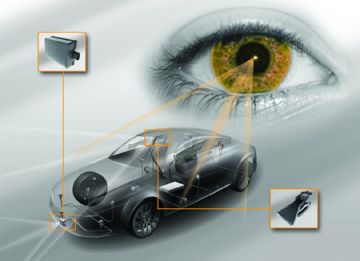
Cornell and Stanford University researchers have developed a system that anticipates what a driver is going to do a few seconds before it happens using cameras and a new computer algorithm. Testing shows errors can be eliminated before they happen.

Some cars are already equipped with safety systems that monitor a car’s movement and warn if there is an unsafe turn or lane change, the researchers noted. But the warning comes too late, after the driver has acted.

However, by observing the driver’s body language and considering that in the context of what’s happening outside the car, a computer algorithm computes a probability that the driver will turn, change lanes or continue straight ahead, according to the researchers from the two universities.

“There are many systems now that monitor what’s going on outside the car,” explained Ashutosh Saxena, assistant professor of computer science at Cornell. “Internal monitoring of the driver will be the next leap forward.”

Saxena and Ashesh Jain, a Cornell graduate student, will describe their system in a workshop on “Model Learning for Human-Robot Communication” at the 2015 Robotic Science and Systems conference July 16 in Rome.

By combining driver anticipation with radar or cameras to locate other vehicles, the car’s safety system could warn the driver when the anticipated action could be dangerous. The warning might be a light, a sound or even a vibration. “If there’s danger on the left, the left side of the steering wheel or the seat could vibrate,” Jain suggested.

The system also might give an “illegal turn” message if the driver was planning, say, to turn the wrong way on a one-way street by drawing on street maps and GPS information.

Saxena and colleagues recorded video of 10 drivers, along with video of the road ahead, for 1,180 miles of freeway and city driving over a period of two months. A computer using face detection and tracking software identified head movements and learned to associate them with turns and lane changes, so that the final system can anticipate possible actions the driver may take. The computer continuously reports its anticipations to the car’s central safety system.

In a test against another data set of videos with different drivers the system correctly predicted the driver’s actions 77.4% of the time, anticipating an average 3.53 seconds in advance. Those few extra seconds might save lives, Saxena said.

To see the original article go to The Detroit Bureau.

Apr 18, 2015connieshedron
Renewed & Refreshed at NAFA I&EGE Capital Fleet Services Introduces BrightWorks Insights Analytics Platform
Recent Posts
  • Why the Traditional Vehicle Ordering Cycle No Longer Works
  • IMPROVLearning: How Comedy, Behavioral Science and AI Improve Fleet Safety
  • Improving Productivity with AI: Turning Fleet Data into Faster Decisions
  • How AFLA Is Positioning Itself for the Future of Fleet Mobility
  • Keep Every Heavy-Duty Maintenance Inspection on Track — Free Fullbay Checklist
  • Last Chance to Save: Register for NAFA’s Maintenance Workshop
  • Google’s New Rules May Actually Favor Fleet Industry Marketing Specialists
  • National Safety Council Projects Increased Traffic Crash Risk during Fourth of July Weekend
  • Gain Data-Driven Insights into Commercial Vehicle Market Trends at Executive Leadership Summit
  • License Plate Cameras Are About to Start Tracking a Lot More Than Just Your Car
ASSOCIATION NEWS
How AFLA Is Positioning Itself for the Future of Fleet Mobility
Last Chance to Save: Register for NAFA’s Maintenance Workshop
‘Raise Your Hand and Get Involved’
NAFA Names 2026 Class of Fellows, Honoring Leaders in Fleet Management
Award Winners Honored at NAFA I&E
2026 NAFA I&E Seeks to Change Perceptions, Invigorate Fleets
NAFA Announces Lineup for Media Day at I&E 2026: Industry Leaders to Showcase the Latest Innovations
TECHNOLOGY
Improving Productivity with AI: Turning Fleet Data into Faster Decisions
Fleet Operations Are Changing – The Industry Needs to Evolve With Them
AI-Powered Vehicle Inspections Move Beyond the Checklist
Motive’s New Workforce Capabilities Aim to Improve Performance, Automate Rewards
AI + Human Insight: Why Fleet Leaders Need Both to Win in 2026
NTSB Finds Automation Overreliance Contributed to Two Fatal Ford BlueCruise Crashes
New AI Assistants Automate Fleet Data Analysis, Decision Making and More
CONFERENCES & WEBINARS
2026 NETS Strength IN Numbers Conference: Early Bird Rates!
AFLA 2026 – Keynotes Announced!
Private Fleets Flex at National Private Truck Council Conference
Free NAFA Webinar: Manage Your Fuel Cost Volatility
Registration Now Open for NETS Annual Conference
Early Bird Pricing for AFLA 2026 – Ending June 1
NAFA Online Seminar: Essentials of Fleet Management
INDUSTRY ANNOUNCEMENTS
Union Leasing Becomes Moventum Fleet Management as 70-Year Company Accelerates into Next Phase
Fleetio Wins Innovations Award at NAFA’s 2026 Institute & Expo
WIFM is heading to NAFA!
Cox Automotive Unveils Cox Fleet, Setting a New Standard for Fleet Uptime Nationwide
AFLA Canadian Fleet Professional of the Year Award: Nominations Open!
NAFA Webinar: Kickoff the 2026 100 Best Fleets Contest on December 4!
Join NAFA’s Free Fleet 101 Live Course

Fleet Management Weekly Newsletter Archive
Access to back issues of the FMW newsletter.

FMW Mobility
How mobility is rapidly changing the fleet management landscape.

Newsletter

Subscribe

FMW Fleet Videos
Video clips of industry leaders speaking on a variety of engaging hot topics in fleet.

2014-2020 © Fleet Management Weekly