By Josh Turley, CEO, RTA Fleet
February 13, 2022
Electric trucks are certainly all the rage in the news right now. We all eagerly await our chance in line to get these into our fleets. Of course, at this point, we’d be happy to just get any vehicles, but I digress.
We’ve seen Electric Truck announcements from new companies like Rivian and Lordstown, as well as established electric player Tesla. The Big 3 were silent for a long time until Ford announced its Lightning F-150, and now just recently the big announcement from GM at this year’s CES expo.
While a lot of these vehicles are designed with the consumer in mind (Cybertruck anyone?), I think it’s important to see how electric trucks fit into a fleet’s overall electrification strategy — which means looking at these from a different perspective than most reviewers in media.
Silverado EV Truck
Here are some of my thoughts on the newly announced Silverado EV Truck (which is really an EV Avalanche, if you remember those).
I like the design as a consumer. But as a fleet professional, I would have liked them to stick with the current 1500 design (unless the 1500 will be moving to this platform as well, which it doesn’t sound like it will). They opted instead to share the same EV platform as the Hummer EV, which is more consumer-focused, and not something many of us in fleet would ever consider.
I like solutions that think innovatively, using greenfield ideas to see what’s possible that our existing platform limits us on. CyberTruck and the EV Silverado (E-Valanche… I think it’ll catch on) get us that. But I LOVE solutions where we innovate within certain constraints that give us the ability to move forward faster with lower costs.
Lightning Vs. Silverado EV
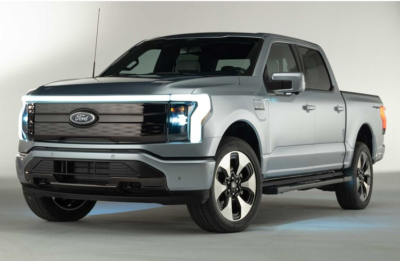
I think Ford nailed the commercial design of the Lightning compared to the Silverado EV, since it reuses the existing truck design. Same frame, same cab, same bed, similar suspension. So as a fleet owner running F-150s, even though I have different engine variations, I still have a lot of the same parts that are interchangeable between my ICE fleet, and my EV fleet. I don’t need to stock another entire set of one-off parts for yet another MY. I don’t need to relearn how to take apart the interior, replace a window motor, tail gate, etc. It’s (mostly) the same between all 2021/2022s. GM didn’t do that here, and I think it’s a missed opportunity. It’s not really a surprise though since the original Avalanche was based on the Tahoe/Suburban platform instead of the Silverado. But at least it was an established platform that a lot of us were familiar with. The Hummer EV platform doesn’t have that advantage.
Other things I liked about the Silverado EV: GM absolutely nailed the overall look and fixed the things that made the Avalanche less aesthetically pleasing. Bringing back the mid-bed drop gate from the Avalanche is smart. I dislike how short the 5.5″ beds are in the Ford SuperCrews. Having the ability to transport an 8-foot sheet of plywood or 10-foot sticks of lumber occasionally is nice. I’ve heard that this feature won’t be available on the work truck trim, but I haven’t been able to confirm that yet. It would be a real shame if this is only available on the $100k version of the truck.
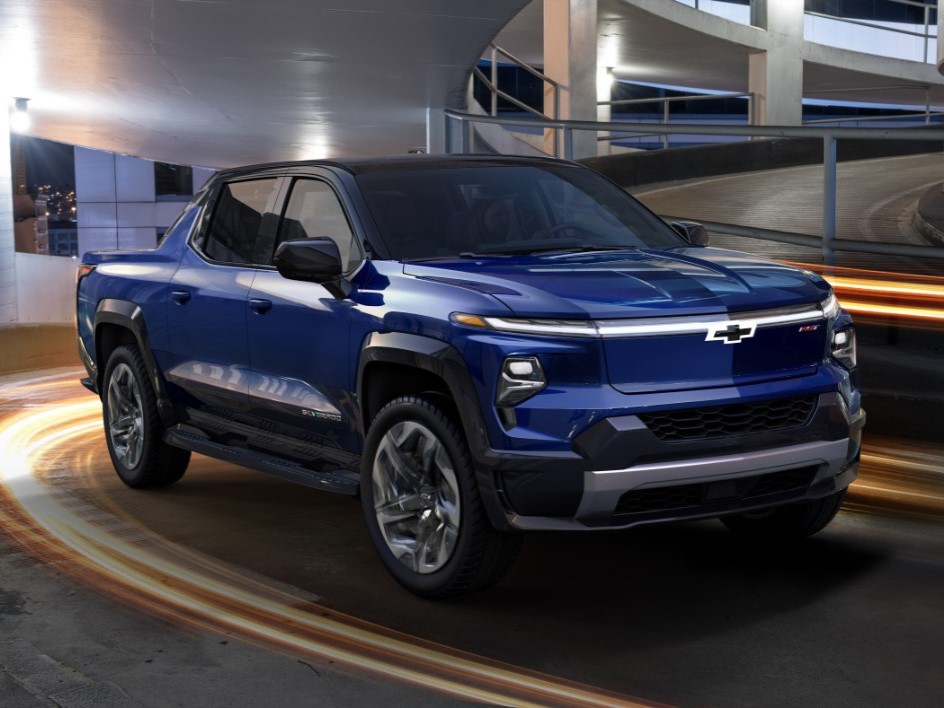 Continuing on, more horsepower and better range are big. Chevy is promising 664 HP and 780 lb-ft of torque. The Lightning ER is “only” at 563 HP and 775 lb-ft of torque (what a wonderful world we live in when second-place still has over 500 HP). The Chevy has 400 miles of range, while Ford is only estimating 300 miles for its Extended Range version. Ford has two years to catch up since the Silverado EV won’t be out until 2024, but it likely won’t make any changes before then, based on how long they’ve taken to introduce the Raptor R to compete against the Ram TRX.
In my opinion, the MOST important thing they beat Ford on is the charging ability. Being able to use a 350-kw vs 150-kw rated system is HUGE, especially when combined with the range advantage. The reason this is so big is that the better we can get the charge time to drive time ratio, the faster we’ll see a shift in the adoption of EVs. I can tell you no one wants to spend 1 hour charging for every 2 hours driving on a road trip. The closer we can get to 10 minutes per 400 miles (about the ICE refueling equivalent) without killing our batteries, the better off EVs will be. Right now, there’s a huge time tax for owning an EV if you can’t refuel overnight at home.
This faster charging is something for us to consider as well to make sure we’re future-proofing our charging systems, even as we’re in the middle of adopting them. It would be a bummer in 2024 to have a truck that’s able to charge faster be limited by the infrastructure we put in place just three years earlier.
Of course, the biggest downside to the GM truck is that it won’t be available until 2024. Even when it is available, only having two trim levels just underwhelms. That’s two whole years where fleets will be able to start investing in the F-150 Lightning to meet green initiatives, a truck by the way with every trim available from XLT to Platinum. I’m not sure why GM waited so long to get into the market just to give us fewer options. But I’m glad they are finally getting into the space. Competition makes everyone else better, and we as fleets win in the long run.
In the end, as a fleet manager, you’ll have to decide if you want to wait two years for the Silverado EV, or if you’ll invest in the Ford F-150 platform for now. I do think the advantage of the shared platform is huge, but based on how many mixed fleets I’ve seen out there, it’s not an advantage many of us leverage. Even so, the Silverado EV has some incredible plus sides over the Lightning on paper today, the charging ability being the biggest among them in my mind. When it finally does ship, it will deserve strong consideration from fleets across the board.
 About the author
Josh Turley is the CEO of RTA, a provider of Fleet Management Information Systems, and co-host of “The Fleet Success Show,” an agnostic podcast focused on helping fleets succeed. See him speak at the Fleet Success Summit along with 12 other industry thought leaders on topics ranging from Leadership and Culture to Resource Efficiency and Risk Management, all the pillars of Fleet Success.